Blistered Shishito Peppers!

shishito peppers

In the office this past week, I overheard some guys talking about shishito peppers and how one of them was trying to grow them in his garden. He was eating them by the bowlful and thought it would be more economical to grow his own. I had been intrigued about these peppers in the past, but never really got around to trying them until today. I bought some at my coop this morning and then noticed them in Trader Joe’s too! These Japanese peppers are high in vitamins A and C. They’re generally not spicy peppers, but about one out of every ten is spicy (mild), which is actually a pleasant surprise. Unlike jalapenos, they are thin-walled, so they cook very quickly on the stove and are best eaten while still warm. Eat the entire pepper, except the stem. They’re delicious, making it easy to polish off the entire bowl, like I did. They make for a quick appetizer or snack, and even a nice side dish for brunch!

Ingredients:
2 teaspoons sesame oil
6 ounces shishito peppers
sea salt
1/2 teaspoon toasted sesame oil
1/2 teaspoon soy sauce
1/2 teaspoon toasted sesame seeds

Procedure:
1. In a large dutch oven, over high heat, add sesame oil.
2. When hot, add shishito peppers and a pinch of salt. Toss to combine.
3. Saute for 4-5 minutes, stirring frequently, until the peppers are mostly blistered on all sides.
4. Toss with sesame oil and soy sauce until the peppers are evenly coated, and sprinkle with sesame seeds.
5. Serve warm. Enjoy!
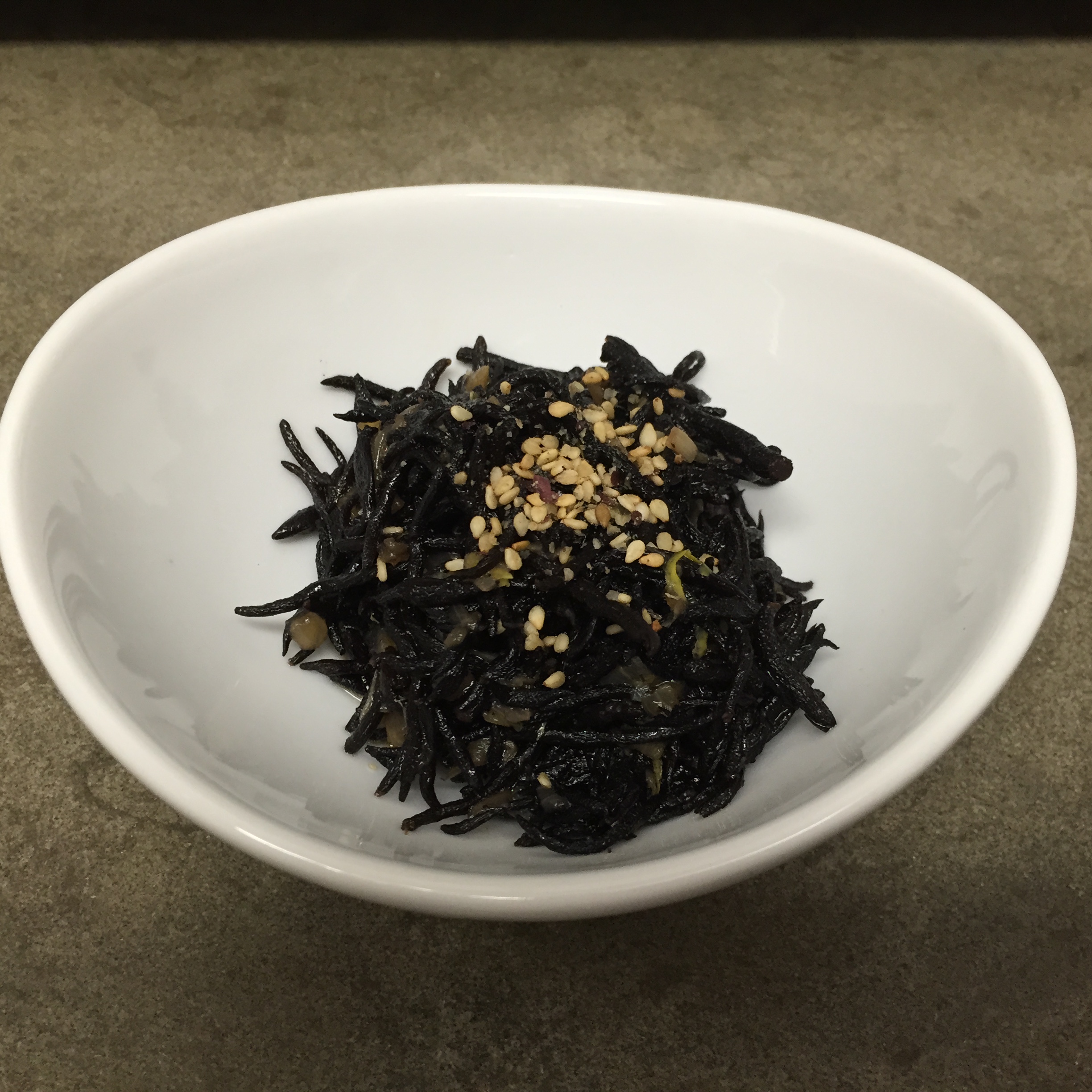
Hiziki with Lemon!

hiziki

As long as I can remember, I’ve always loved seaweed in all forms. As kids, my brothers and I used to eat the dried, roasted nori strips as snacks. The green seaweed salad at Japanese restaurants was always and still is a favorite side dish. In Chinese restaurants, you can find kombu seaweed salad that is a very dark green, usually prepared with lots of garlic. My mom used to tell us that eating seaweed would make our hair darker (Japanese folklore)! In culinary school, we learned about all types of seaweed in our sea vegetables class. As it turns out, hiziki is the most nutrient dense! It became more widely available in the US during the macrobiotic movement. It’s high in fiber as well as essential minerals, including calcium, iron, and magnesium. Hope you enjoy this simple recipe!

1 cup dried hiziki (rinsed and soaked 15-20 minutes)
1 small onion, small dice
2 teaspoons sesame oil
2-3 tablespoons shoyu or soy sauce
1 lemon, zested and juiced

1. Drain off any remaining soaking water from hiziki and discard.
2. In a large saute pan, saute onion in sesame oil for 3 to 5 minutes. Add hiziki, mixing well.
3. Add enough water to just barely cover hiziki. Add shoyu or soy sauce. Bring to a boil. Cover, lower the heat, and simmer for about 30 minutes. Remove cover and cook until most liquid has evaporated.
4. Gently stir in lemon juice and zest until well mixed. Serve.

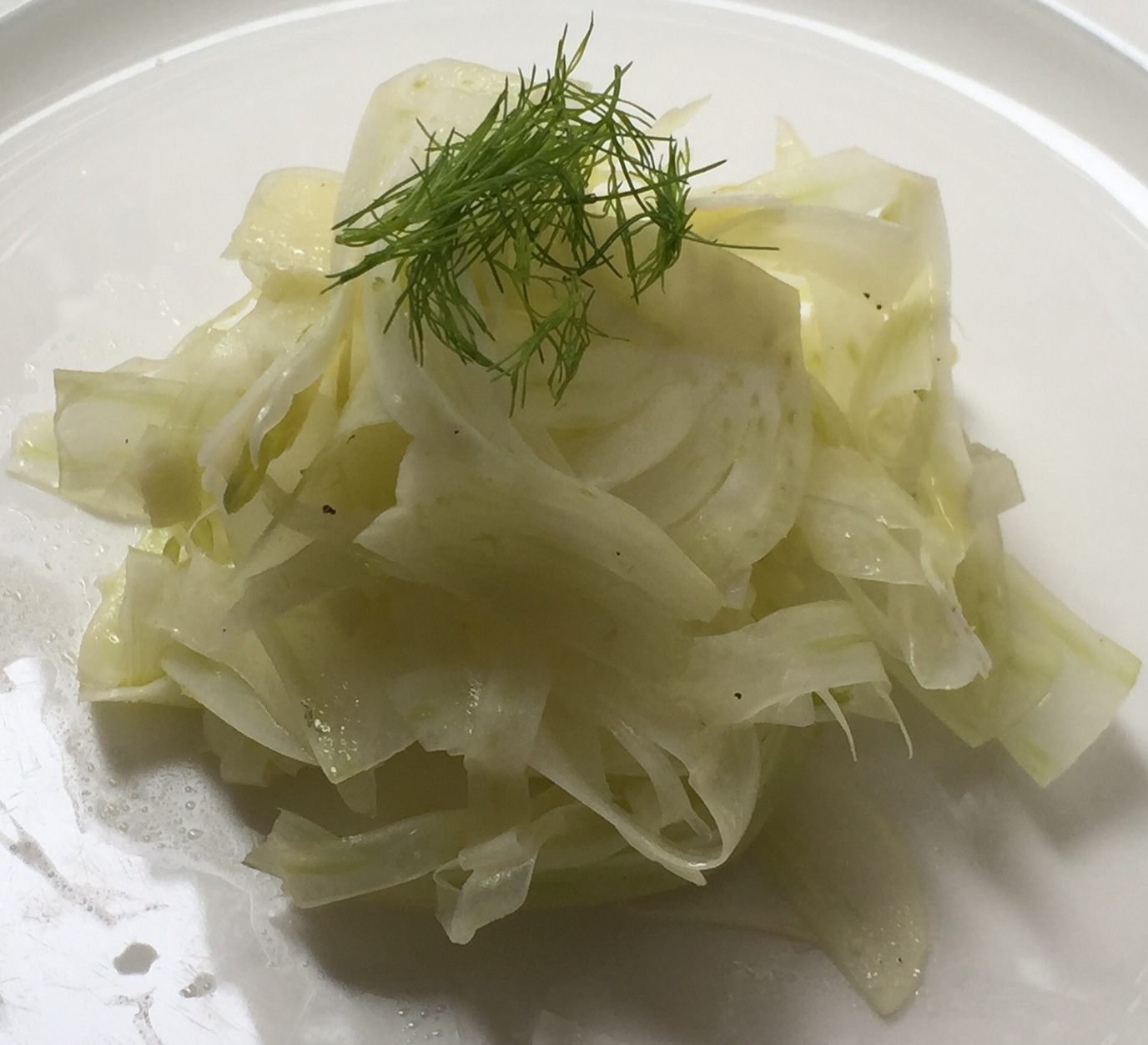
Shaved Fennel Salad

fennel salad

This salad is so beautifully simple, light, and delicious, a welcome break from all of the heavy winter squash salads. The few ingredients really highlight the fennel and make it great as an appetizer with mixed greens or as a side dish. The best way to thinly slice the fennel is on a mandoline.  Fennel is a good source of Vitamin C, potassium, and folate. It also has phytonutrients that have been shown to reduce inflammation and prevent cancer. We are also in peak fennel season right now  (fall through early spring). Serve this at your next dinner party!

Yield: about 2 servings

Ingredients:
1 fennel bulb, cored and thinly sliced (save fronds for garnish)
Parmigiano-Reggiano cheese
1 tablespoons extra-virgin olive oil
1/2 tablespoon fresh lemon juice
Kosher salt and freshly ground pepper

Procedure:
1. Place fennel in a medium bowl. Using a sharp vegetable peeler, shave the Parmesan in thin shards over the fennel.
2. Add the olive oil, lemon juice, and salt and pepper to taste. Toss the salad gently, then adjust the seasoning with more salt and pepper if necessary. Shave more Parmesan on top, sprinkle with the fennel fronds, and serve immediately.

Cancer-Fighting Crucifers!

brussels sprouts

Brussels sprouts and wasabi are cruciferous plants, like kale and broccoli, which means that they have phytochemicals that have been shown to repair DNA cells and even block the growth of cancer cells. I usually simply roast brussels sprouts in the oven with olive oil, salt, and pepper, but when I came across this recipe with wasabi and miso, I was intrigued. The wasabi packs a punch and will surely clear your nasal passages! I love this recipe and have already made it a few times in the last month.

Brussels Sprouts Salad

Ingredients:

1 pound brussels sprouts

2 green onions, sliced

Miso Dijon Sauce:

1 tablespoon white miso

1 teaspoon Dijon mustard

2 teaspoons pure water

¼ teaspoon wasabi powder

1 teaspoon avocado oil 

Procedure:

1. Wash and slice Brussels sprouts into strips with chef’s knife. If you have a food processor, save time by running your sprouts through the shredder blade. Place them in large glass bowl.

2. In a small bowl, mix together sauce ingredients. Set aside.

3. Heat skillet to medium-high and then add oil. Place sliced green onion and brussels sprouts into pan. Sear veggies for 2 to 3 minutes and then stir. Sear another 3 minutes and then stir. Repeat one more time and remove from heat.

4. Fold in sauce. Serve warm.

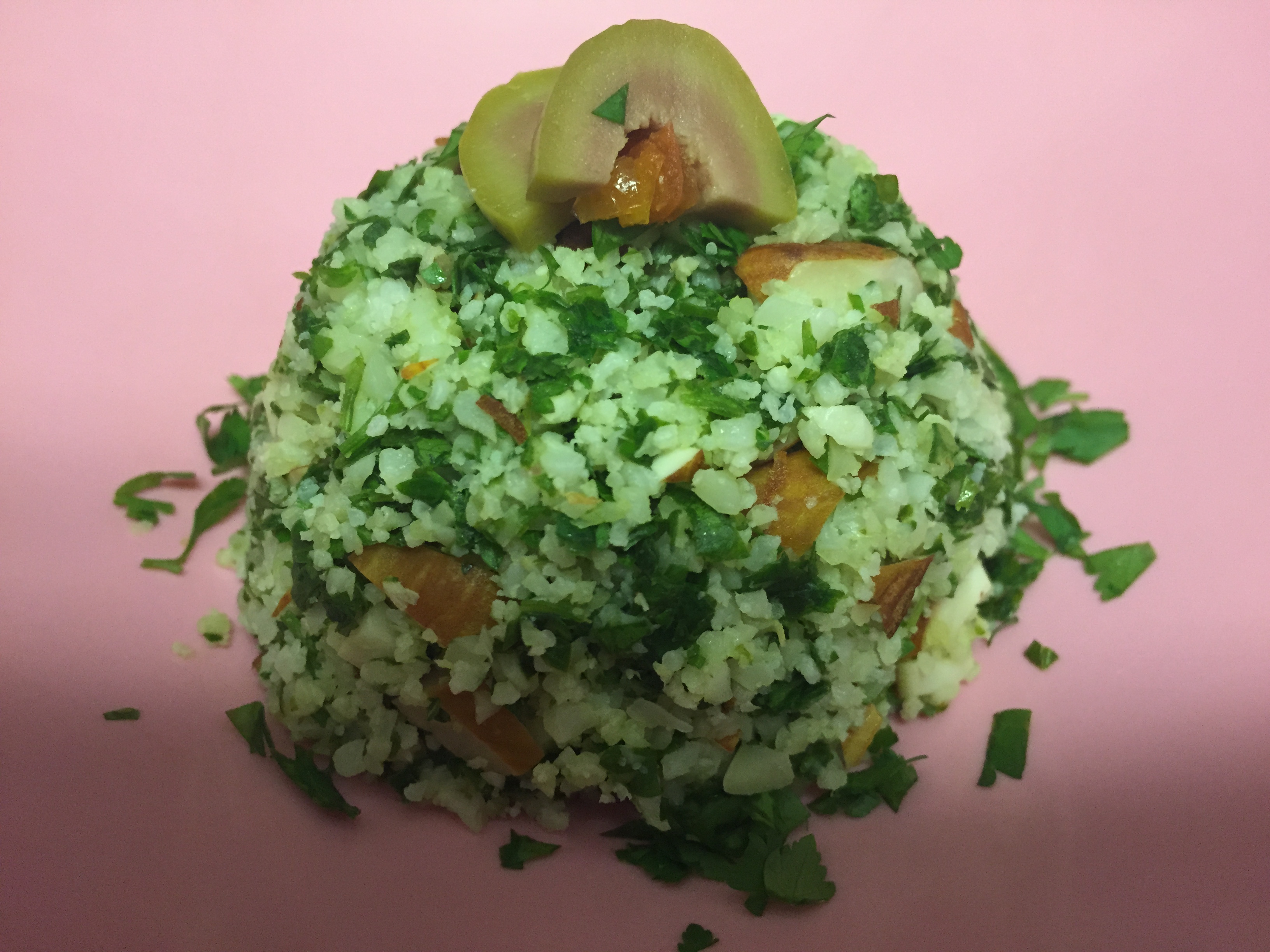
Cauliflower Couscous!

cauliflower couscous

While in culinary school, one of my classmates mentioned making a cauliflower fried rice which sounded really interesting. That’s what prompted me to try this unique recipe. Cauliflower is a cancer-fighting crucifer and an excellent source of Vitamins C and K. Even my Mom, who is always skeptical of my healthy food, liked it! Success!

Cauliflower Couscous

Yield: 4 to 6 servings

INGREDIENTS

1 head cauliflower, broken into florets

½ cup almonds, toasted and roughly chopped

1 bunch cilantro, de-stemmed

1 bunch parsley, de-stemmed

2 tablespoons extra-virgin olive oil

½ teaspoon crushed red pepper flakes

Juice of 1 lemon

¼ cup sliced habanero-stuffed green olives

Salt and pepper, to taste

DIRECTIONS

1. Bring a large pot of salted water to a boil. In a separate large bowl, make an ice bath.

2. While the water is heating, place some of the cauliflower florets in a food processor. Working in batches, pulse until the cauliflower has broken down into coarse pieces around the same size as couscous.

3. Transfer the cauliflower to a large fine-mesh strainer and carefully submerge into boiling water for 1 minute. Transfer the cauliflower (still in the strainer) to the ice bath until completely cool; remove and drain well. Place the cauliflower onto a clean kitchen towel and squeeze to remove excess moisture.

4. Mince the parsley and cilantro leaves in food processor.

5. In a large bowl, whisk the olive oil, red pepper flakes, and lemon juice. Then add cauliflower, almonds, cilantro, parsley, and olives. Stir together ingredients, breaking up any clumps of cauliflower.