
Kelp noodles are made out of the seaweed kelp and are fat-free, gluten-free, and very low in carbs, which makes them perfect for people with different dietary requirements.They are rich in a number of nutrients, mainly calcium, iron, and vitamin K. However, they are naturally high in sodium, so be mindful if you need to watch your sodium intake. They are a healthy and delicious alternative to conventional pasta and noodles and actually remind me of vermicelli or glass noodles, common in asian cooking. The sesame-ginger sauce coats the noodles nicely and the addition of a rainbow of thinly sliced veggies makes it really appealing and yummy. They also hold up well in soup and do not require cooking. Hope you enjoy them as much as I do!
Sesame-Ginger Kelp Noodles
12 ounces kelp noodles
juice of half a lime
1/3 cup tahini
1 tablespoon rice vinegar
1 tablespoon ume plum vinegar
1 tablespoon finely grated fresh ginger or 1 teaspoon of ground ginger
1 tablespoon white miso
1 teaspoon tamari
1 teaspoon sesame oil
pinch red pepper flakes
¼ cup water
¼ cup shredded red cabbage
¼ cup thinly sliced green beans
1 carrot, julienned
2 tablespoons chopped cilantro
2 tablespoons thinly sliced scallion
2 tablespoons sesame seeds (preferably black)
1. Soak kelp noodles in a large bowl of warm water with lime juice for 30 minutes
2. Rinse noodles thoroughly, then drain and transfer to a dry bowl
3. In a small bowl, whisk together the tahini, rice vinegar, ume plum vinegar, ginger, miso, tamari, sesame oil, and red pepper flakes. Once blended, whisk in water until you reach your desired consistency.
4. Toss the kelp noodles in the sesame-ginger sauce (depending on how saucy you like your noodles, you may have some sauce left over). Toss in the cabbage, green beans, and carrots. Garnish with cilantro, scallion, and sesame seeds. Serve immediately.
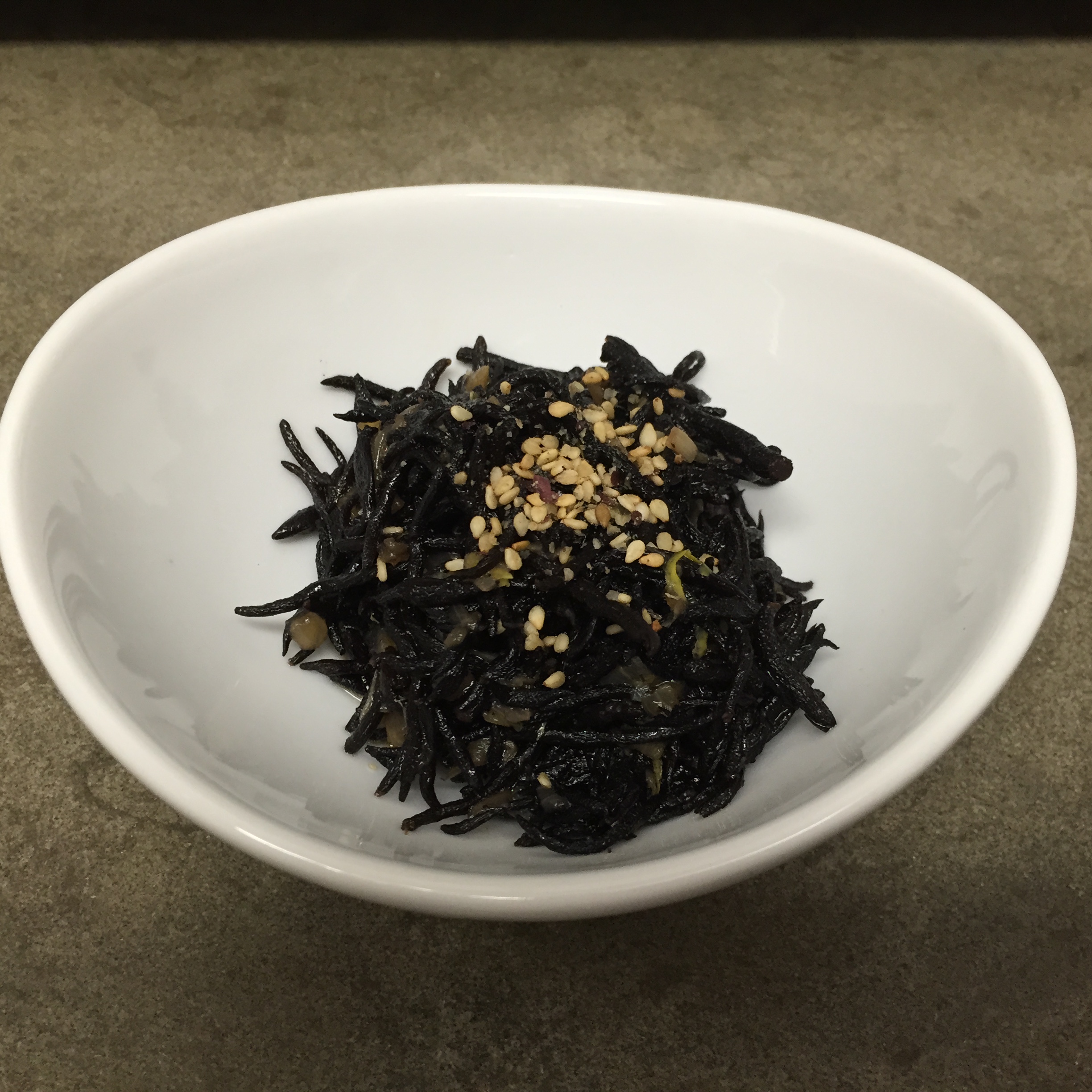
 happy happy nom nom