Aji Verde (Peruvian Green Chili Sauce)

aji verde

Recently, I went to Sophie’s Cuban Cuisine near me and had completely forgotten how much I love their green sauce. The first time I made it, I used the food processor and didn’t really like the consistency of the sauce even though it tasted great. The Vitamix worked out better and was less cleaning, so win-win. You can use this sauce on just about anything, including meat, seafood, veggies, etc. It’s actually a nice salad dressing too!

Ingredients:

1 bunch cilantro, including stems
4 jalapenos, most seeds removed and roughly chopped
2 garlic cloves, peeled
¼ cup avocado or olive oil
1-2 tablespoons mayonnaise (optional)
Squeeze of lemon juice
½ teaspoon sea salt

1. Puree all ingredients in blender. Mayonnaise adds creaminess. If the sauce appears too thick, add water to thin it out. Refrigerate to allow flavors to meld together. It keeps fresh for about a week. Enjoy!

InstantPot Pork Butt and Mashed Cauliflower!

instantpot pork butt

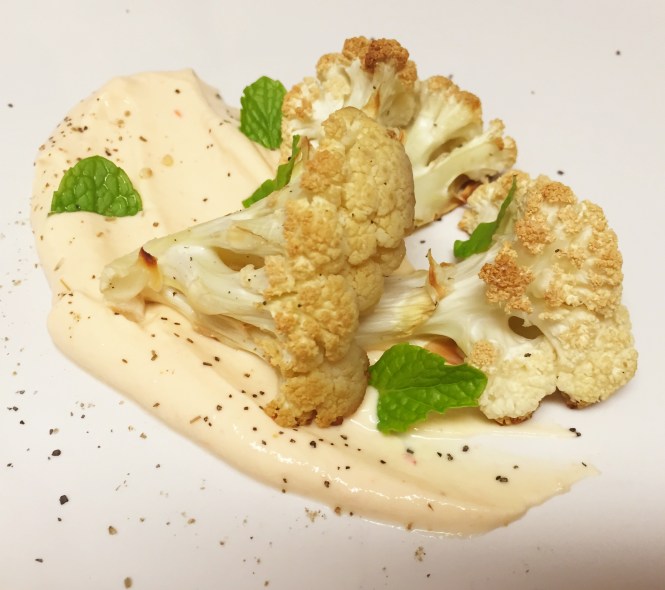
Last weekend, my husband suggested making a pork butt since it’s something that would likely last us for a few days. He tries to save me time from having to cook too often which is very thoughtful. This was my first time cooking a pork butt in the pressure cooker and I was pleasantly surprised at how easy it was! It goes really well with mashed potatoes, but since he’s not eating carbs, I decided to pair it with pureed cauliflower, which is delicious. I think I actually enjoy it more than mashed potatoes because it’s not so heavy but still rich and creamy. My baby enjoyed the puree too which was a bonus 🙂 This meal required very little time to prep and was absolutely perfect. I will definitely be making it again!

InstantPot Pork Butt

Ingredients:
1 4-4 ½ pound pork butt
2 teaspoons sea salt
1 teaspoon garlic powder
1 teaspoon paprika
1 teaspoon black pepper
1 ½ cups water
1 onion, quartered
3 cloves garlic, peeled

Procedure:
1. Cut pork butt into 3 large pieces and season all over with spices.
2. Add water to pot, then pork butt, onion and garlic.
3. Cover and set to Manual cook for 90 minutes.
4. Allow to naturally release pressure. Enjoy!

Mashed Cauliflower

Ingredients:
1 head cauliflower, cut into florets
3-4 cloves garlic, peeled
1/4- ½ cup whole milk
3 tablespoons butter, room temperature
salt
pepper

Procedure:
1. Blanch cauliflower and garlic until soft, about 8-10 minutes.
2. Drain well.
3. Transfer to food processor or Vitamix with other ingredients and puree until smooth.


InstantPot Chili!

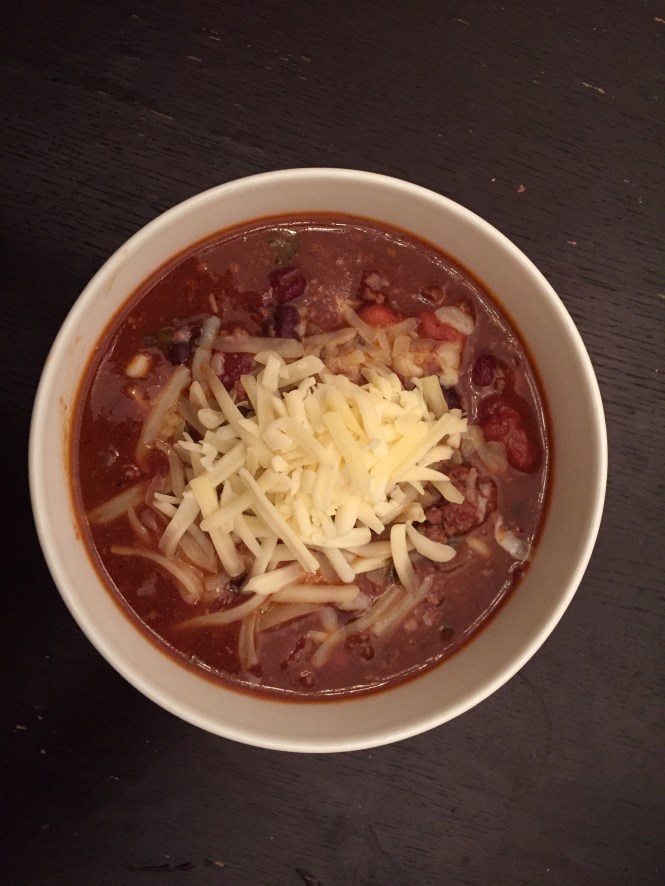
Hello friends! Sorry, it has been quite a long time since my last post and to be honest, I’m not sure when my next post might be. After giving birth to my baby girl, who is almost 11 months now, life has been crazy and hasn’t left me much time to blog, let alone cook. My husband is a big fan of this chili recipe so it’s one of our go-to meals. The pressure cooker has been a lifesaver in making meals come together much quicker. Hope you’ll enjoy this one! If you don’t have a pressure cooker, you can do this on the stove, but it will need to simmer for at least 2 hours.

Ingredients:

olive oil
2 pounds ground beef
1 onion, diced
2 jalapeños, small dice
3 stalks celery, diced

2 teaspoons cumin
2 1/2 tablespoons chili powder
pinch black pepper
½ teaspoon salt
1 – 15 ounce can kidney beans, with liquid
1 – 15 ounce can pinto beans, with liquid
1 – 15 ounce can black beans, with liquid

1 – 14.5 ounce can diced tomatoes
1 – 15 ounce can tomato sauce

Procedure:

1. Set your InstantPot to Saute and add oil to pot.
2. Once pot is hot, add ground beef and cook until browned.
3. Add vegetables and cook until onion is translucent.
4. Add spices and beans. Add 1/2 cup water. Mix well.
5. Add diced tomatoes and tomato sauce. Do not mix.
6. Then place lid on and set to 10 minutes on manual.
7. When done, allow the pressure to release naturally. Enjoy!

Chili!

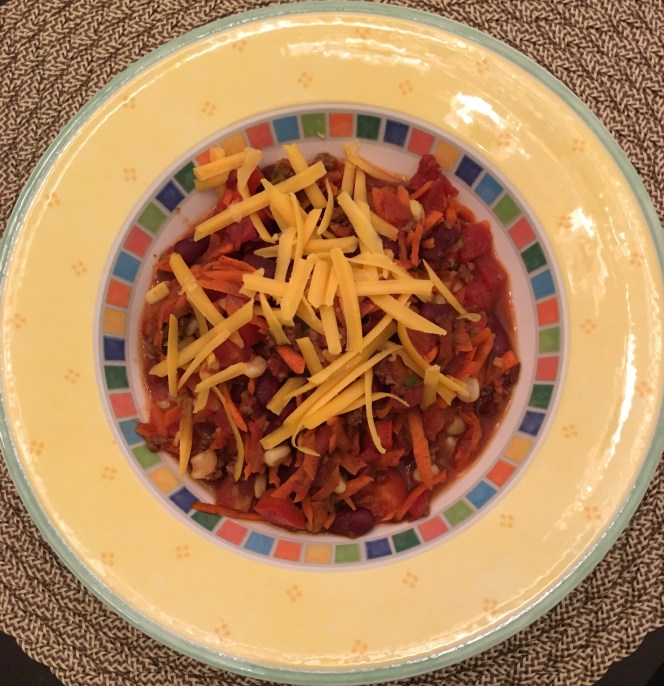
fancy-chili

After having a spring-like 60 degree day yesterday, winter reminded us that she’s still here with a blizzard that has dropped about a foot of snow so far in New York City. Seems like a perfect day to enjoy a big bowl of chili 🙂 I’ve begun to incorporate more meat into my diet these days, as I’m expecting and need more protein than before. However, this recipe can easily be made vegetarian just by eliminating the ground beef and possibly replacing with crumbled tofu or TVP. The recipe comes together very quickly and is delicious!

Ingredients:

2 tablespoons olive oil
4 cloves garlic, minced
1 cup chopped scallion
1 pound ground beef
3 tablespoons chili powder
2 teaspoons ground cumin
One 28-ounce can fire-roasted diced tomatoes
One 28-ounce can diced tomatoes
3 cups cooked red kidney beans
2 medium red bell peppers, cored, seeded and diced
6 medium carrots, peeled and grated
1 cup frozen sweet corn
Pinch of salt

Optional topppings:

shredded cheddar cheese
chopped scallion
sour cream
Procedure:

1. In a large saucepan, heat the oil over medium heat. Add the garlic and green onions and cook for about 1 minute.
2. Add the ground beef and cook until browned, about 5 minutes. Stir in the chili powder and ground cumin until fully combined.
3. Add the tomatoes, beans, bell pepper, carrots, corn and salt. Bring the mixture to a boil, and then reduce the heat to low. Cover and simmer the chili for 15 minutes.

Adapted from Trisha Yearwood’s Fancy Chili recipe

Butternut Squash Soup!

butternut-squash-soup

I made this soup as part of our Thanksgiving feast and wanted to share the very simple recipe. Although there are few ingredients, this soup is truly delicious and perfect for autumn!

Ingredients:
1 (2-3 pound) butternut squash, peeled, seeded, and diced into 1” chunks
2 tablespoons unsalted butter or olive oil
1 medium onion, diced
6 cups chicken stock or vegetable stock
pinch of nutmeg
salt and freshly ground pepper

Directions:
1. In a large pot, melt butter or add oil. Add onion and cook until translucent, about 8 minutes.
2. Add squash and stock.
3. Bring to a simmer and cook until squash is tender, about 15-20 minutes.
4. Remove squash chunks with slotted spoon and place in blender to puree.
5. Return blended squash to pot and stir.
6. Season with nutmeg, salt, and pepper.
7. Enjoy!


Spicy Thai Carrot Ribbons!

spicy thai carrot ribbons

The creaminess of the peanut butter tames the heat of the crushed red pepper flakes in this yummy sauce for gently cooked carrot ribbons. No spiralizer needed! It could easily be bulked up into an entree with the addition of edamame or some crispy tofu over jasmine rice. Enjoy!

Serves 2

Ingredients:
1 tablespoon sesame oil
1 garlic clove, minced
¼ teaspoon crushed red pepper flakes
¾ cup vegetable broth
2 tablespooons creamy peanut butter
1 tablespoon soy sauce
1 teaspoon rice wine vinegar
2 medium size carrots
thai basil
toasted sesame seeds

Directions:
1. In a large skillet over medium heat, heat the sesame oil.
2. Add minced garlic and crushed red pepper flakes and cook just until fragrant, stirring constantly.
3. Add broth, peanut butter, soy sauce, and vinegar. Increase the heat to high and stir constantly until the peanut butter melts into the sauce.
4. Reduce the heat to medium-low and cook for about 5 minutes.
5. In the meantime, use a vegetable to first peel off the skin and discard. Then shave carrots into thin ribbons.
6. Add ribbons to the pan and cook for 2 minutes. Stir to coat thoroughly in sauce.
7. Serve warm and garnish with thai basil and toasted sesame seeds.

*Follow me on Instagram for more delicious photos!*


Broiled, Butterflied Chicken!

broiled butterflied chicken

First of all, to everyone who is a father, Happy Father’s Day! A couple of weeks ago, I was watching an old episode of Good Eats and Alton Brown was making this chicken recipe, which I’ve adapted. Instead of roasting a trussed chicken, he chooses to butterfly it to allow for more even cooking as well as a reduction in cooking time, which is always welcome in my kitchen. This recipe is really simple and can be easily modified to one’s own tastes.

Ingredients:
1 ½ teaspoons black peppercorns
4 garlic cloves, minced
½ teaspoon sea salt
1 lemon, zested
olive oil
1 large onion, large dice
3 carrots, peeled and ¼ inch slices on the bias
3 stalks of celery, ½ inch slices on the bias
2 small yukon gold potatoes, ¼ inch half moons
3 – 4 lb broiler/fryer chicken
sea salt
1 cup white wine
1 pint chicken stock
3 to 4 sprigs fresh thyme
olive oil

Directions:
1. Position oven rack 8 inches below flame/coil and turn broiler to high.
2. Crack peppercorns with a mortar and pestle until coarsely ground. Add garlic and salt and work well. Add lemon zest and work just until you can smell lemon. Add just enough oil to form a paste.
3. Add onion, carrots, celery, and potatoes to deep roasting pan.
4. Place chicken on a plastic cutting board breast-side down. Using kitchen shears, cut ribs down one side of back bone and then the other and remove.
5. Turn chicken breast-side up and spread out like a butterfly by pressing down on the breast and pulling the legs toward you. Loosen the skin at the neck and the edges of the thighs. Evenly distribute the garlic mixture under the skin.
6. Drizzle the skin with oil and rub in, being sure to cover the bird evenly. Drizzle oil on bone side of chicken as well. Salt both side. Arrange bird in roasting pan, breast up, atop vegetables.
7. Place pan in oven and check bird in 10 minutes. If the skin is nicely browned, flip over and cook for another 12 to 15 minutes, or until the internal temperature reaches 165 degrees and juices run clear. Remove chicken and allow to rest on cutting board.
8. Set roasting pan over 1 or 2 burners on high, depending on size of the roasting pan. Deglaze pan with wine, scraping bits from bottom. Add chicken stock and thyme and reduce to make a jus. While the liquids are reducing, the vegetables will have more time to cook.
9. Slice chicken onto plates or serve in quarters. Sauce lightly with jus and serve.

Chickpea Pancake with Ramps!

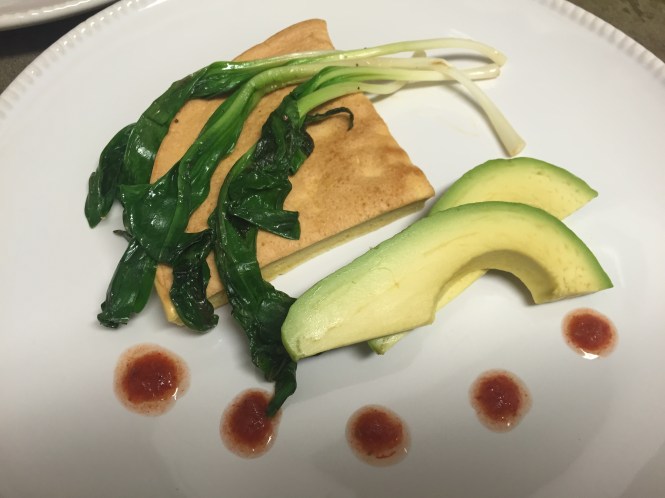
chickpea pancake

It’s ramps season! I’m embarassed to say this is my very first time actually cooking ramps, but they are so delicious. Hence, the excitement over ramps season, which is only a few weeks during the spring. They are very limited in supply, as they grow very slowly, requiring up to four years to flower and reproduce. Ramps have a garlic and onion flavor, reminding me of Chinese chives. Get to your local farmer’s market before they’re gone! They really don’t need much, as they’re full of flavor, and complement the chickpea pancake perfectly. Simply saute the ramps in some olive oil and sprinkle with salt and pepper.

I had been meaning to try this pancake recipe over the last month. It’s supereasy and also very versatile. You can vary the different spices in the batter and/or top it with some whipped greek yogurt and lemon zest. The pancake is also superfilling and packs in 9 grams of protein per piece. This would be a perfect weekend brunch item 🙂

Ingredients:
4 large eggs
1/2 cup water
1/2 cup chickpea flour
1/2 teaspoon sea salt
1/2 teaspoon freshly ground black pepper
1/2 teaspoon baking powder
1/4 teaspoon ground spice, such as cumin, sweet paprika, curry powder or garam masala
1 tablespoon olive oil or avocado oil

Procedure
1. Whisk the eggs in a bowl until well blended, then whisk in the water, chickpea flour, salt, pepper, baking powder, and the spice of your choice, until well combined and lump-free. Or to guarantee a lump-free batter, place all ingredients in a blender.

2. Heat the oil in a small nonstick skillet over medium-low heat. Pour in the egg mixture; cook undisturbed for about 5 minutes. Once the underside is set and lightly browned but the top isn’t fully set, carefully flip the omelet. (It helps to use one of those large pancake spatulas).Cook for about 1 minute more; the omelet is done once the second side is set.

3. Cut into quarters and divide between plates. Enjoy!

Home-brewed Kombucha!

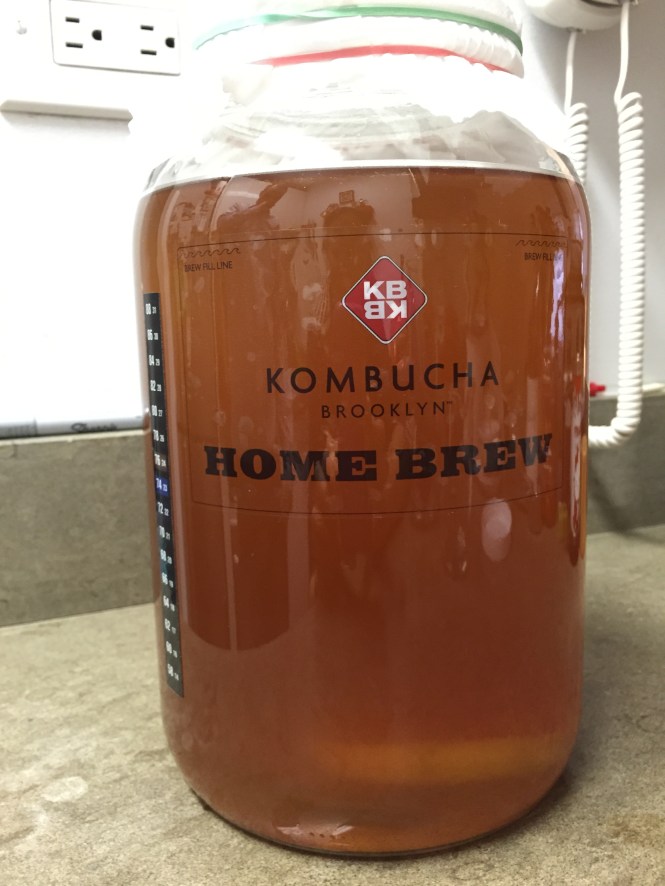
kombucha_ready to brew

Like many other health foods, I was first introduced to kombucha while attending the Natural Gourmet Institute. We were learning about the benefits of living foods, including fresh/raw, sprouted, fermented, and dehydrated foods. Fermented foods were of particular interest to me when I learned that they introduce beneficial bacteria (probiotics) into your digestive system that have been shown to slow or reverse some diseases, aid digestion, and boost immunity. In order to nourish or feed the probiotics, it’s important to eat plenty of prebiotics, which are abundant in fruit and vegetables. Through Kombucha 101 class I also learned that it’s not just the probiotics that we benefit from, it’s also the seven different acids created through fermentation that are beneficial to the body. These acids help detoxify the body, balance a number of critical systems, and increase nutrient absorption, among other benefits. The microbes in kombucha transform the sugar and other compounds into highly accessible polyphenols and other antioxidants, B vitamins, vitamin C, organic enzymes, amino acids, and organic acids. Kombucha is a true superfood!

When I began to drink a bottle of kombucha on a daily basis, it started to get pricey at $4 or $5 a bottle, so the cost motivated me to learn how to make it myself. The SCOBY, symbiotic culture of bacteria and yeast, kind of freaked me out, but after taking the Kombucha 101 class at Kombucha Brooklyn (located in Kingston, NY), I realized that the scoby is a beautiful living thing. With each batch of kombucha, a new scoby is produced, so you can give them to friends or family to begin their own brews. It’s kind of an amazing process and I’m so happy that I’ve begun to make my own. Brewing kombucha is surprisingly easy! I found the Kombucha! book by Eric and Jessica Childs to be incredibly helpful. I purchased this kit to start: http://www.kombuchabrooklyn.com/kombucha-home-brewing-kits/kbbk-super-kit.html.

Once you start brewing, all you really need to buy are tea and sugar to continue the process. This recipe is adapted from Kombucha Brooklyn’s recipe with some of my additional notes. It takes you through the primary fermentation process. In order to carbonate your kombucha, secondary fermentation is necessary. You can also experiment with flavoring. I’ve only gone as far as putting some sliced ginger in bottles, which I enjoyed. The book provides more guidance on this process and also if you can make it to Kingston, NY, I really loved the Kombucha 101 class. It definitely made me feel more confident that I could successfully brew my own at home. They also offer more advanced classes for brewing kombucha which I may look into once I become a primary fermentation pro 🙂

Equipment:
1 gallon glass brew jar
Cloth cover and rubber bands
temperature strip
6 – 16 oz glass bottles

Ingredients:
SCOBY with starter liquid
1 cup organic evaporated cane sugar
12 oz. tea bag (black, white, and green tea blend)

Procedure:

1. Boil 4 cups of filtered water.
2. While the water is boiling, clean the brewing area, jar, hands and utensils and make sure the items are well-rinsed and free of soap residue.
3. Steep tea bag in hot water for 20 minutes, making sure to stir the tea every 5 minutes.
4. Remove tea bag and stir sugar until fully dissolved.
5. Add 2 quarts of cold filtered water to the gallon brew jar; add the sweetened tea. Stir.
6. Stick the temperature strip on the side of the brew jar and make sure the temperature is below 90 degrees before adding the scoby with its starter liquid (a temperature of 90 and above could kill the scoby)
7. Cover the jar with the cloth cover with 2 rubber bands (in case one breaks). Make sure the cover is pulled tightly over the rim of the jar to prevent contamination/fruit flies.
8. Keep the brew jar in a warm environment between 72 and 80 degrees, avoiding direct sunlight. If your home is not warm enough, you can buy a small heating mat to either wrap around or put under the jar, depending on how cool your home is.
9. Within 2-4 days, you should see a new scoby developing on the surface.
10. You should start tasting your kombucha by day 7 to see where it’s at and whether or not you want to continue fermenting. This is really a matter of personal preference. Also, remember that your kombucha will ferment faster at warmer temperatures. In order to taste, you can use a clean shot glass to gently push the scoby down and scoop a little from the surface.
11. Once your kombucha is to your taste, you’re ready to bottle. Remove the original and new scoby and 2 cups of kombucha to use for your next batches. If you don’t plan to make a new batch right away, place these in an airtight glass container in the refrigerator. The original and the new scoby can each be used to make their own batches.
12. For bottling, I used a funnel for my first batch and that was a little messy. For the second batch, I may invest in an auto siphon to avoid spillage. Place bottles in the fridge, unless you plan to continue into secondary fermentation.
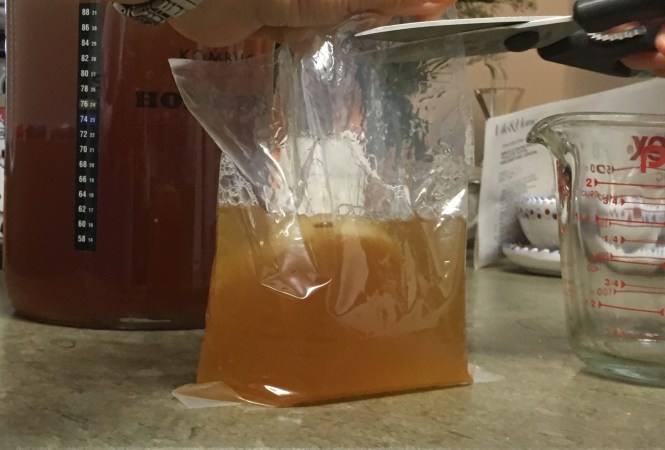
scoby and starter

If you’re buying a scoby, it will come in a plastic bag with starter liquid.

new scoby_first batch

In my first batch of kombucha, the original scoby was vertical and the new scoby developed at the surface, as it should.
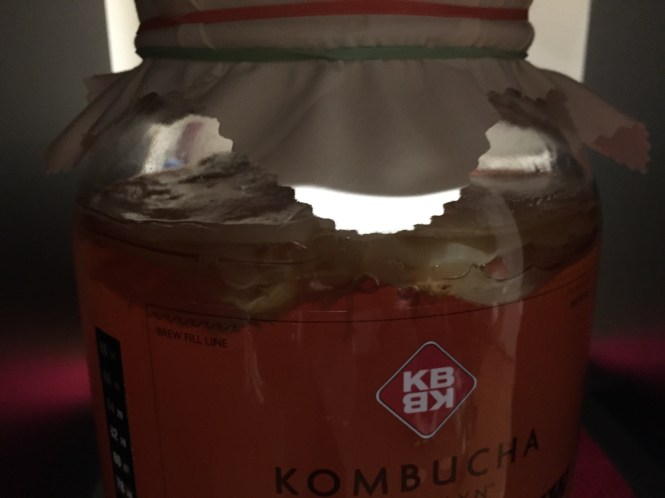
new scoby_second batch

In my second batch, I used the new scoby that was created from the original. This new scoby sat at the top and another scoby is developing right on top.
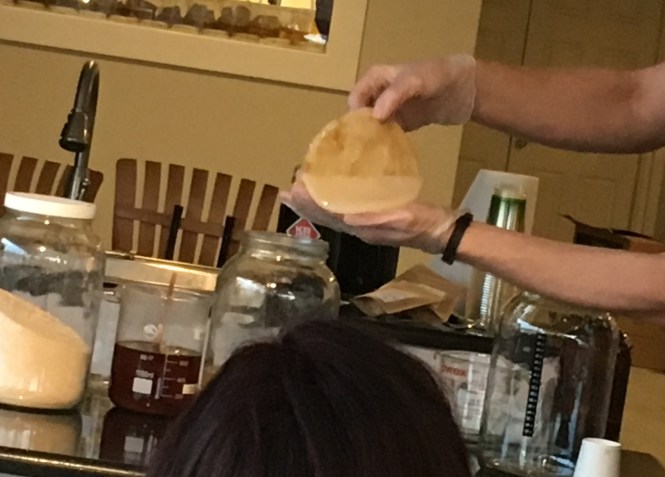
new scoby

This is a photo from class: Eric Childs at Kombucha Brooklyn is removing his picture-perfect new scoby on top from the original one. Exciting stuff!

Happy brewing!!


Roasted Garlic-Harissa Yogurt Dip!

roasted garlic harissa yogurt dip

Harissa is a blend of hot chile peppers, garlic, olive oil and spices and commonly used as a flavor base for curries and stews, as well as a condiment in the Middle East. Use it to add some spice in place of your regular hot sauce. The heat of the harissa, creaminess of the yogurt, sweetness of the roasted garlic, and acidity of the lime juice perfectly balance each other. This is versatile and works well as a dip or sauce with crudite, roasted veggies, and chicken.

Ingredients:
1 bulb roasted garlic, peeled and mashed
1 tablespoon harissa
2 cups plain full fat greek yogurt
juice from ½ lime
salt
mint leaves, garnish

Procedure:
1. In a food processor, add roasted garlic, harissa, and greek yogurt. Pulse until smooth.
2. Stir in lime juice and season with salt to taste.
3. Garnish with mint leaves
4. Enjoy!

Shiitake-Ginger-Miso Soup!

shiitake-ginger-miso soup

I made this soup today in an attempt to beat the sniffles, but even if you’re not fighting a cold, it’s really delicious and soothing. If you prefer not to eat the ginger, you can peel and leave in large chunks so that they can easily be removed later. Boost your immune system with the help of shiitakes, garlic, and ginger in addition to the healing powers of miso. Add some leafy greens to the pot before serving for extra vitamins!

Ingredients:
1 tablespoon avocado oil or olive oil
2-3 inch piece of ginger, peeled and finely chopped
1 onion, diced
1 head of garlic, peeled and minced
3 carrots, diced
10-12 fresh shiitake mushrooms, sliced
¼ cup white miso paste
1 head of roasted garlic, peeled and mashed
Directions:
1. In a large dutch oven, heat oil over medium heat and saute ginger and onion until onion is translucent.
2. Add raw garlic and carrots; saute for a minute before adding 1.5 quarts of water.
3. Bring to a boil, add mushrooms, and lower heat, cover, and simmer for 20 minutes.
4. Remove pot from heat and add miso paste, making sure all of the miso is dissolved.
5. Add roasted garlic paste and stir well.

Crispy Baked Tofu with Cilantro Pesto!

baked tofu with cilantro pesto

I’ve never prepared tofu in this manner before, but it was well worth all of the steps to get perfectly crispy tofu (minus the deep fryer and greasiness). The sifting of arrowroot powder before placing the tofu cubes into the oven helps to make them extra crispy and get a nice golden brown. Toasting the pine nuts for the pesto helps bring out more of the nutty flavor and the addition of lemon zest really brightens it. Enjoy!

Tofu:
12 ounce package extra-firm tofu
2 tablepoons avocado or olive oil
2 tablespoons orange juice
1 teaspoon tamari or soy sauce
2 tablespoons water
1 garlic clove, minced
½ teaspoon red pepper flakes
½ teaspoon sea salt

1/2 tablespoon arrowroot powder or 1 tablespoon tapioca flour

Pesto:
1 bunch cilantro, stemmed
1 garlic clove
1 teaspoon lemon zest

1 teaspoon lemon juice

2 tablespoons pine nuts, toasted

avocado oil
sea salt

Procedure:
1. Drain the packing water from the tofu package. Then drain the tofu by itself, placing it on a layer paper towels or on a clean, dry kitchen towel for 10 minutes.
2. Wrap the tofu in a paper towel and set it on a large plate. Then place another large plates on top of the tofu and place a heavy can of beans or tomatoes on top. Let stand for 30 minutes.
3. Unwrap the pressed tofu, wipe it dry with paper towels, and cut into 1-inch cubes.
4. In a small bowl, whisk together oil, juice, tamari, water, garlic, red pepper flakes, and salt.
5. Place tofu cubes into a shallow pan that just fits all of them and pour over the marinade.
6. Refrigerate for 4 to 8 hours, flipping tofu at least once.
7. For the pesto, add cilantro leaves, garlic, lemon zest, lemon juice, and pine nuts to the food processor. Pulse to combine and drizzle in as much avocado oil that is necessary to loosen mixture. Add sea salt to taste. Refrigerate until tofu is ready.
8. Preheat oven to 350 degrees F. Line a baking sheet with parchment paper.
9. Drain the tofu, getting rid of garlic pieces clinging to tofu, as they will burn in the oven. Place the tofu cubes in a large bowl and sift the arrowroot powder or tapioca flour over the pieces while moving the tofu around in the bowl for even distribution.
10. Place the tofu cubes in rows on the parchment paper and baking, turning the cubes 90 degrees every 15 minutes, until they are crisp and browned, about 45 minutes.
11. Toss the baked tofu with cilantro pesto and serve immediately.

Red Lentil Coconut Curry!

red lentil curry

One of my favorite entrees to order in a Thai restaurant is the red curry. I love how the heat is balanced with the creaminess of the coconut milk. The light coconut milk adds richness without the heaviness that often leaves you feeling sluggish after eating. The red lentils help make it more satisfying, as well as thicken the curry. This would be great with any veggies, especially kabocha squash or Japanese eggplant. Hope you’ll enjoy this comforting dish!

Red Lentil-Coconut Curry

2 tablespoons butter or coconut oil
1 large yellow onion, diced
3 cloves garlic, minced
1 teaspoon minced ginger
1 cup red lentils
1 tablespoon red curry paste
1 tablespoon tomato paste
1 tablespoon curry powder
1 teaspoon coriander
1 teaspoon turmeric
1/2 teaspoon cayenne powder
3 1/2 cups vegetable broth
2 cups baby spinach leaves, tightly packed
1 (13.5-ounce) can light coconut milk
cilantro, to garnish

1. Heat the butter or coconut oil in a dutch oven over medium-high heat. Add the diced onion and cook until lightly golden and soft. Add in the minced garlic and ginger, and sauté for another 2 to 3 minutes. Add in the red lentils, red curry paste, tomato paste, and spices, and cook until fragrant. Pour in the broth and bring to a boil.

2. Once the lentils and broth reach a boil, reduce to a simmer, cover, and cook for 15 minutes, or until the lentils are soft. Before serving, fold in the fresh spinach leaves, and pour in the coconut milk.
3. Serve immediately. Enjoy!

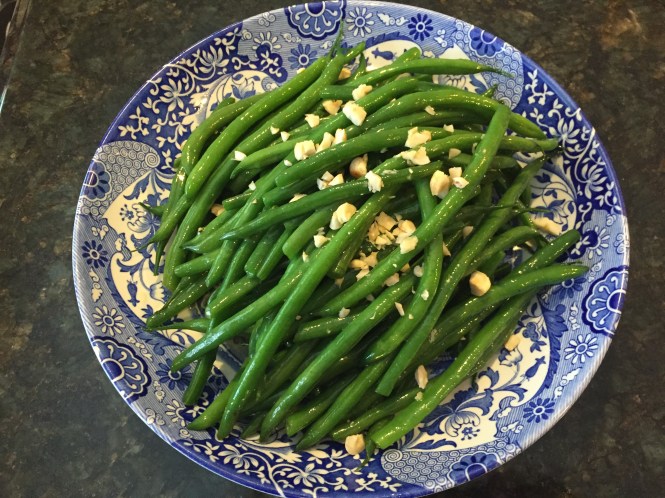
Haricot Vert Almondine!

green beans

Happy Thanksgiving! Hope everyone is enjoying the holiday, surrounded with loved ones. I’m very thankful to have my family to come home to and cook with during the holidays. It’s really fulfilling to see everyone enjoy all of the yummy food.

Green bean casserole was never a tradition in our household, but I’ve always loved crunchy haricot vert. They are rich in Vitamins C and K, folate, potassium, and manganese. I learned this simple, delicious dish when I took a course at the French Culinary Institute several years ago. Normally, I don’t use salted butter, but my Mom bought this by accident and it actually worked well here. Of course, you can use unsalted butter and then adjust the salt level. The haricot vert are so beautifully glazed and the chopped nuts add a nice crunch. We’ll probably be making this again for Christmas! 🙂

Ingredients:
1 pound haricot vert
2 ounces amaretto
freshly ground black pepper
2 tablespoons salted sweet butter
2 tablespoons hazelnuts, toasted, peeled, and chopped or sliced almonds, toasted

Procedure:
1. Bring a large pot of water to a boil. While the water is boiling, prepare an ice bath.
2. Add haricot vert to boiling water and cook for about one minute. Drain and add to ice bath.
3. Bring amaretto to a boil and season with pepper.
4. Add salted butter and cook until thoroughly combined.
5. Add blanched green beans until coated with sauce and just heated through.
6. Top with toasted nuts and serve immediately. Enjoy!

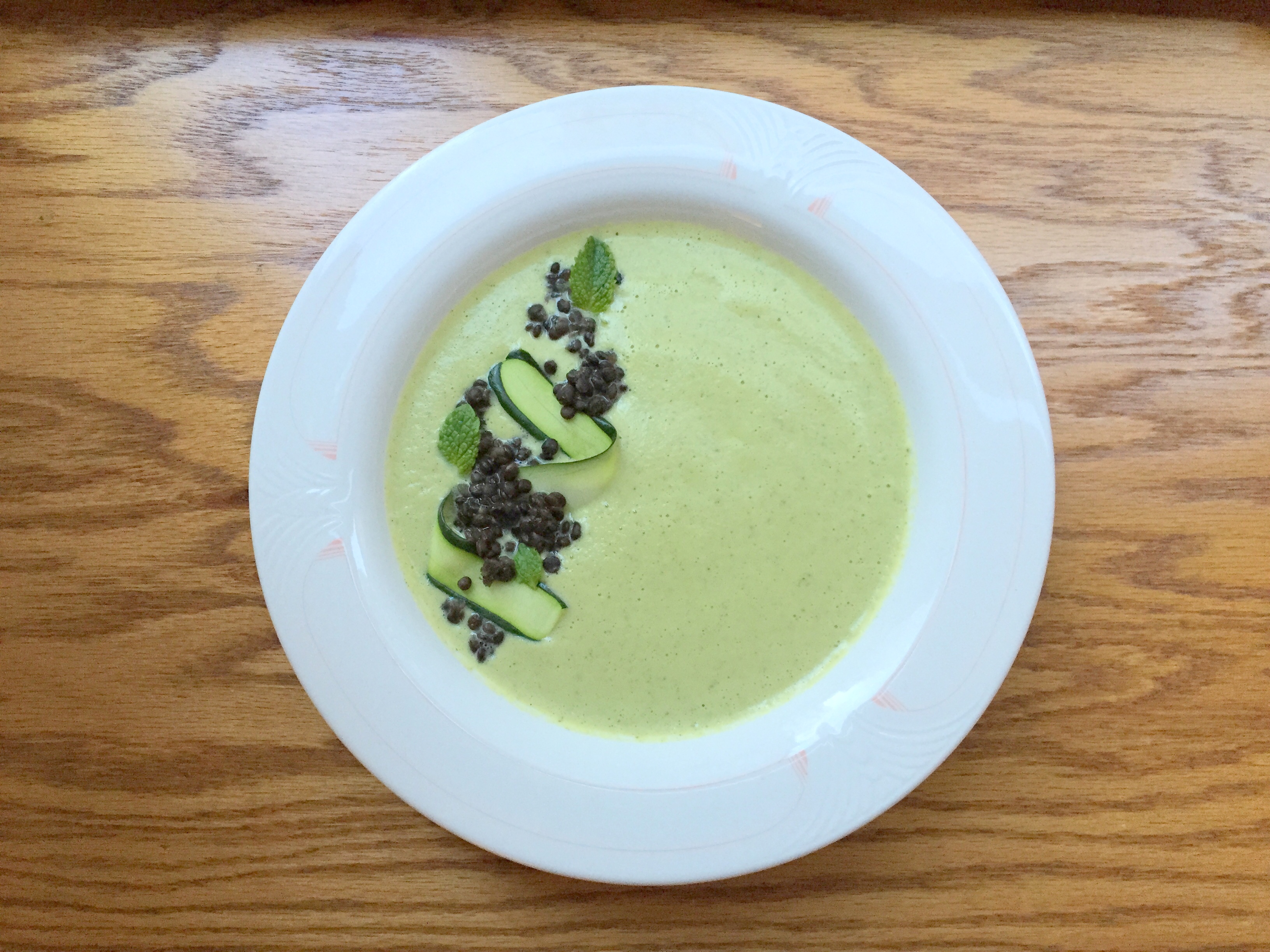
Zucchini, Almond, & Mint Soup!

zucchini almond mint soup

I think I’m in denial that we are fully into autumn and am clinging to the tastes of summer, before we’re hit with winter weather. This is perfect for those of you cleaning out your garden of the last zucchini and mint. The almonds provide creaminess to the soup, while keeping it vegan and light. Zucchini is a good source of Vitamins A and C, as well as potassium. Most of the nutrients are found in the skin, so if you can, buy organic and don’t peel it. The skin also lends a beautiful hint of green to the soup. I added beluga lentils on top in order to give it some heartiness as well as texture. Enjoy!

2 tablespoons extra-virgin olive oil
4 cloves garlic, minced
1 sweet onion, small dice
6 cups chopped zucchini (about 2-3 medium zucchini, unpeeled)
1 1/2 cups slivered almonds
5 cups vegetable stock
1 cup fresh mint
Salt and pepper, taste

1.Heat olive oil in a large pot, then add garlic and onion and sauté over low heat until soft and fragrant, stirring often. Add in chopped zucchini and almonds, and cook everything together for about 5 minutes.
2. Then cover with stock and bring to a boil. Reduce heat and simmer until zucchini is soft and tender, about 15 to 20 minutes. Let cool before blending.
3. Add fresh mint to the soup and blend in a high speed blender until smooth. Season to taste.
4. Serve the soup, hot or cold.

Sesame-Ginger Kelp Noodles!

kelp noodles_blog

Kelp noodles are made out of the seaweed kelp and are fat-free, gluten-free, and very low in carbs, which makes them perfect for people with different dietary requirements.They are rich in a number of nutrients, mainly calcium, iron, and vitamin K. However, they are naturally high in sodium, so be mindful if you need to watch your sodium intake. They are a healthy and delicious alternative to conventional pasta and noodles and actually remind me of vermicelli or glass noodles, common in asian cooking. The sesame-ginger sauce coats the noodles nicely and the addition of a rainbow of thinly sliced veggies makes it really appealing and yummy. They also hold up well in soup and do not require cooking. Hope you enjoy them as much as I do!

Sesame-Ginger Kelp Noodles

12 ounces kelp noodles
juice of half a lime
1/3 cup tahini
1 tablespoon rice vinegar
1 tablespoon ume plum vinegar
1 tablespoon finely grated fresh ginger or 1 teaspoon of ground ginger
1 tablespoon white miso
1 teaspoon tamari
1 teaspoon sesame oil
pinch red pepper flakes
¼ cup water
¼ cup shredded red cabbage
¼ cup thinly sliced green beans
1 carrot, julienned
2 tablespoons chopped cilantro
2 tablespoons thinly sliced scallion
2 tablespoons sesame seeds (preferably black)
1. Soak kelp noodles in a large bowl of warm water with lime juice for 30 minutes
2. Rinse noodles thoroughly, then drain and transfer to a dry bowl
3. In a small bowl, whisk together the tahini, rice vinegar, ume plum vinegar, ginger, miso, tamari, sesame oil, and red pepper flakes. Once blended, whisk in water until you reach your desired consistency.
4. Toss the kelp noodles in the sesame-ginger sauce (depending on how saucy you like your noodles, you may have some sauce left over). Toss in the cabbage, green beans, and carrots. Garnish with cilantro, scallion, and sesame seeds. Serve immediately.

Zucchini-Avocado Tartare!

tartare_blog

This month is super busy for me since I’m doing an online culinary program that is more intense than expected! But I will try to blog when I have free time 🙂 This is a recipe that I just learned and really love for its simplicity. You can easily impress guests with it! Because it’s raw, you’ll be absorbing more of the nutritional goodness. Lemon juice and olive oil help to make the zucchini nice and tender. Also, this is done best with a ripe avocado that is not too soft. Enjoy!

1 small zucchini, small dice
½ tablespoon lemon juice
1 teaspoon olive oil
1/8 teaspoon agave
½ tablespoon chives, minced
½ teaspoon salt
½ avocado, small dice

1. Toss all ingredients until well combined, saving avocado for last so that it doesn’t get mushy.

2. Press into a ring mold (using a spoon) to serve. Garnish with
chive points, fresh ground pepper and a drizzle of olive oil.

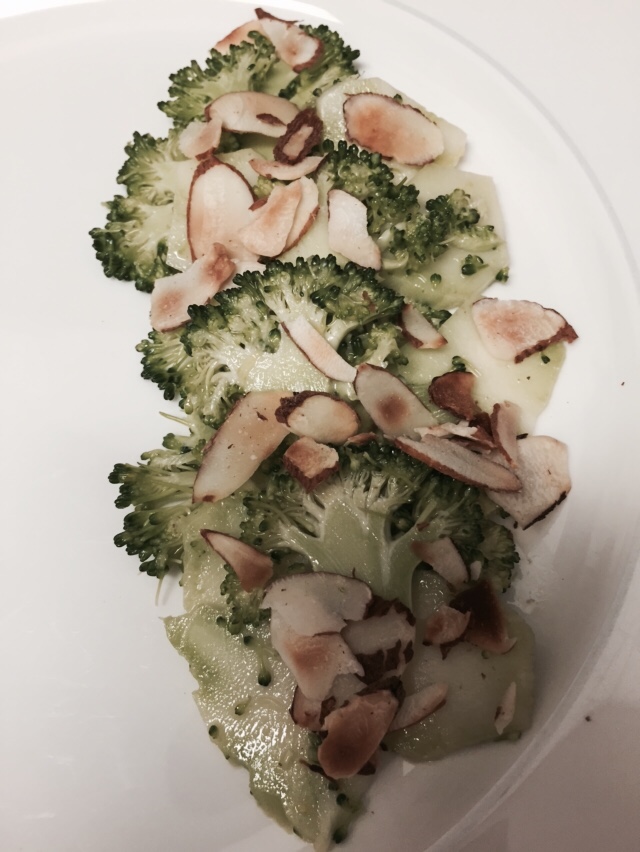
Broccoli Carpaccio!

broccoli salad

This recipe does not require cooking and comes together very quickly, making it ideal for summer. I personally love broccoli stems and for this recipe, be sure to trim and peel them before slicing thin. Broccoli is packed with phytochemicals that boost the immune system and antioxidants that fight cancer. While the toasted almonds are optional, they really add a nice earthy flavor and crunch on top. Enjoy!

1 tablespoon white wine vinegar
1 lemon, zested
1 tablespoon freshly-squeezed lemon juice
2 teaspoons dijon mustard
½ teaspoon sea salt
pinch freshly ground black pepper
¼ cup olive oil
1 pound broccoli, rinsed, trimmed, and sliced thinly (using mandolin or food processor)
sliced almonds, toasted (optional)

1. Whisk together the vinegar, zest, lemon juice, mustard, salt, and pepper in a large mixing bowl. While whisking constantly, gradually add the olive oil until uniform.
2. Add broccoli and toss to coat. Cover and place in the refrigerator at least an hour before serving.
3. Before serving, toss again. Sprinkle with toasted almonds.

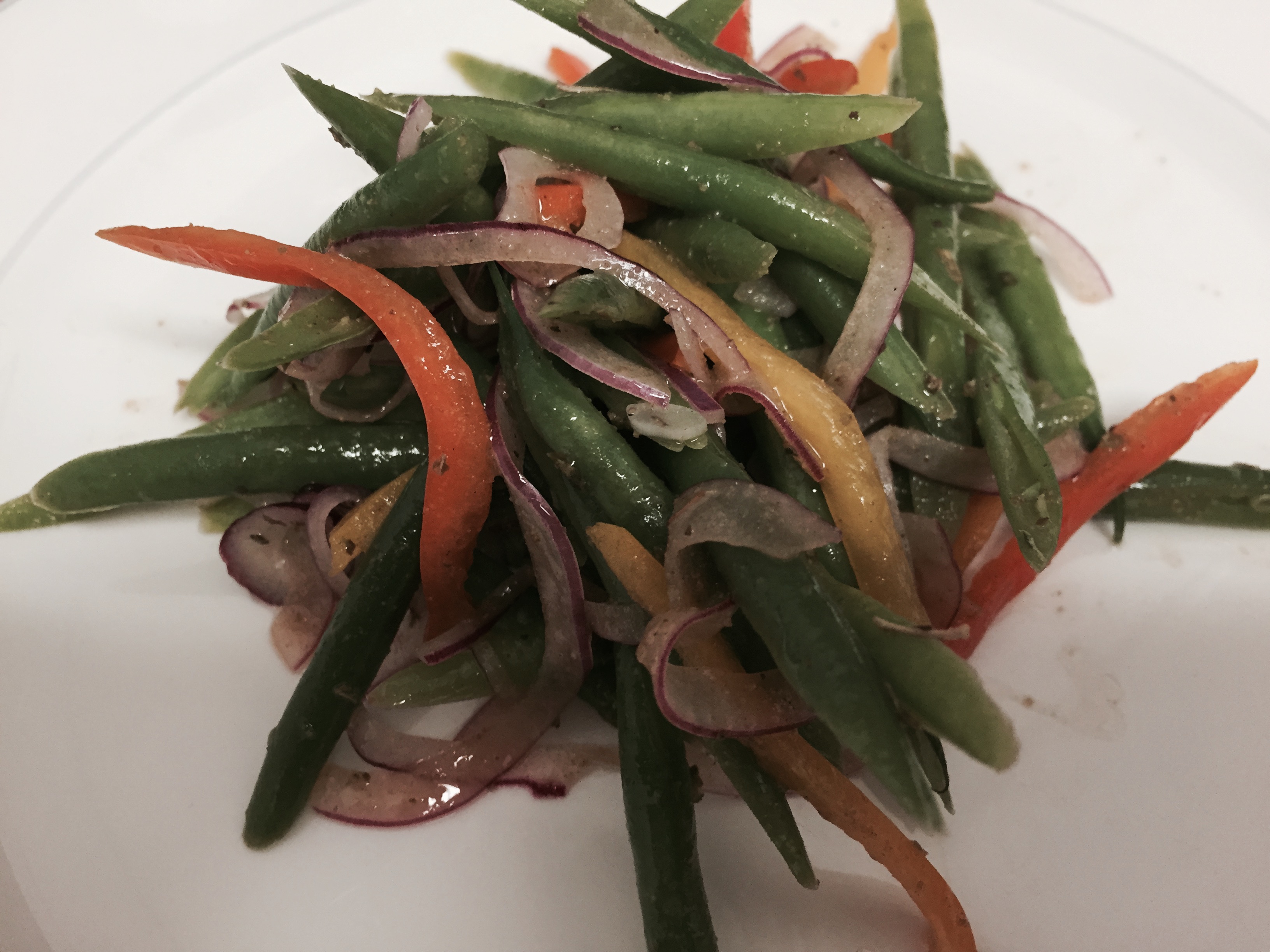
Haricot Vert Summer Salad!

green bean salad

French green beans are sweeter, crispier, and more elegant than ordinary green beans. They are also full of fiber, protein, iron, calcium, and various other vitamins and minerals. Slicing them on a sharp bias is really beautiful but also allows the beans to really absorb the delicious dressing. This is one of my favorite recipes that I had made many times years ago and had forgotten about, until I had an abundance of haricot vert. Enjoy!

1 pound french green beans
5-6 mini bell peppers, thinly sliced
1 medium red onion, thinly sliced
¼ cup avocado oil or EVOO
3 tablespoons red wine vinegar
1 teaspoon dried oregano
2 teaspoons ground cumin
½ teaspoon sea salt
¼ teaspoon freshly ground pepper

1. Bring a large pot of water to a boil and add green beans. Cook for 1 minute. Remove and place in large bowl of ice water until cool. Drain well. Slice each green bean on the bias into 2-3 pieces, based on size.
2. In a large bowl, whisk together oil, vinegar, and spices.
3. Add green beans, bell peppers, and onion to dressing and toss until evenly distributed. Let stand at room temperature at least 15 minutes and toss again before serving.

Zucchini Noodles with Garlic Scape Pesto!

Garlic Scapes Pesto

Garlic scapes are the flower stalks that spring out of the garlic bulb and impart a milder garlic flavor. They are harvested at this time of year so that they won’t drain nutrients from the garlic bulbs that will be dug up in a couple of months. Similar to garlic, they are high in antioxidants, believed to have anti-cancer properties, and strengthen the immune system. Zucchini noodles are such a nice no-cook summer dish and they absorb the pesto beautifully. Leftover pesto can be used in numerous ways, such as a spread on toasted baguette, tossed into a pasta with heirloom tomatoes, mixed into scrambled eggs, or spread on pizza. Unlike basil pesto, this will not brown, so it will maintain its vibrant green for the week!
1 zucchini, spiralized or julienned

Pesto:
1 cup garlic scapes, trimmed and thinly sliced crosswise (about 1/3 lb)
¼ cup pine nuts
½ cup olive oil
¼ cup freshly grated pecorino romano or parmesan
Salt and pepper, to taste

1. Add the scapes and pine nuts to the bowl of a food processor and pulse until everything is broken up a bit.
2. Then turn the processor back on, and with it running, add the oil a little at a time until it’s fully incorporated. 3. Add cheese, pulse, then season with salt and pepper to taste.
4. Mix 2-3 tablespoons into the zucchini. Enjoy!