Home-brewed Kombucha!

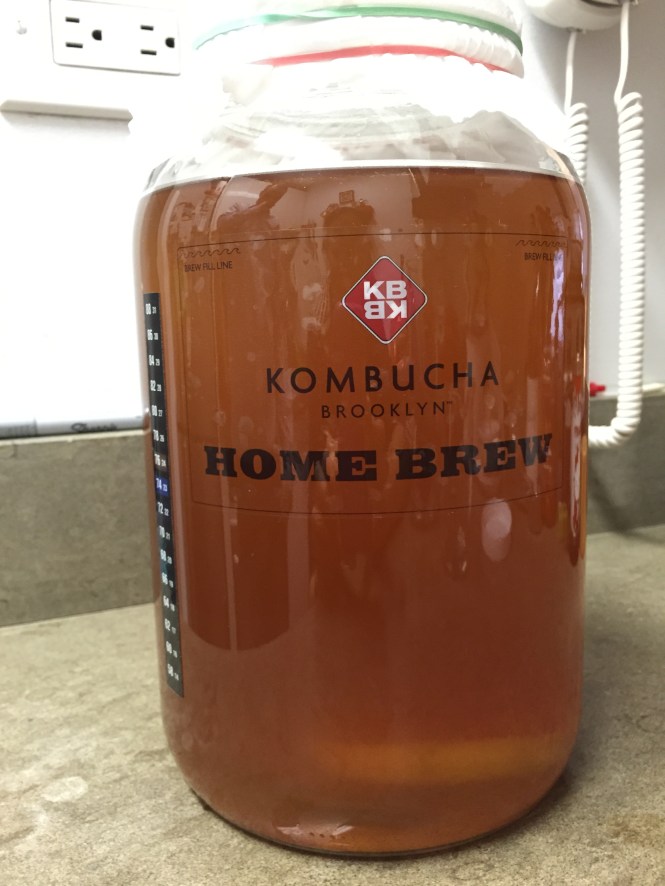
kombucha_ready to brew

Like many other health foods, I was first introduced to kombucha while attending the Natural Gourmet Institute. We were learning about the benefits of living foods, including fresh/raw, sprouted, fermented, and dehydrated foods. Fermented foods were of particular interest to me when I learned that they introduce beneficial bacteria (probiotics) into your digestive system that have been shown to slow or reverse some diseases, aid digestion, and boost immunity. In order to nourish or feed the probiotics, it’s important to eat plenty of prebiotics, which are abundant in fruit and vegetables. Through Kombucha 101 class I also learned that it’s not just the probiotics that we benefit from, it’s also the seven different acids created through fermentation that are beneficial to the body. These acids help detoxify the body, balance a number of critical systems, and increase nutrient absorption, among other benefits. The microbes in kombucha transform the sugar and other compounds into highly accessible polyphenols and other antioxidants, B vitamins, vitamin C, organic enzymes, amino acids, and organic acids. Kombucha is a true superfood!

When I began to drink a bottle of kombucha on a daily basis, it started to get pricey at $4 or $5 a bottle, so the cost motivated me to learn how to make it myself. The SCOBY, symbiotic culture of bacteria and yeast, kind of freaked me out, but after taking the Kombucha 101 class at Kombucha Brooklyn (located in Kingston, NY), I realized that the scoby is a beautiful living thing. With each batch of kombucha, a new scoby is produced, so you can give them to friends or family to begin their own brews. It’s kind of an amazing process and I’m so happy that I’ve begun to make my own. Brewing kombucha is surprisingly easy! I found the Kombucha! book by Eric and Jessica Childs to be incredibly helpful. I purchased this kit to start: http://www.kombuchabrooklyn.com/kombucha-home-brewing-kits/kbbk-super-kit.html.

Once you start brewing, all you really need to buy are tea and sugar to continue the process. This recipe is adapted from Kombucha Brooklyn’s recipe with some of my additional notes. It takes you through the primary fermentation process. In order to carbonate your kombucha, secondary fermentation is necessary. You can also experiment with flavoring. I’ve only gone as far as putting some sliced ginger in bottles, which I enjoyed. The book provides more guidance on this process and also if you can make it to Kingston, NY, I really loved the Kombucha 101 class. It definitely made me feel more confident that I could successfully brew my own at home. They also offer more advanced classes for brewing kombucha which I may look into once I become a primary fermentation pro 🙂

Equipment:
1 gallon glass brew jar
Cloth cover and rubber bands
temperature strip
6 – 16 oz glass bottles

Ingredients:
SCOBY with starter liquid
1 cup organic evaporated cane sugar
12 oz. tea bag (black, white, and green tea blend)

Procedure:

1. Boil 4 cups of filtered water.
2. While the water is boiling, clean the brewing area, jar, hands and utensils and make sure the items are well-rinsed and free of soap residue.
3. Steep tea bag in hot water for 20 minutes, making sure to stir the tea every 5 minutes.
4. Remove tea bag and stir sugar until fully dissolved.
5. Add 2 quarts of cold filtered water to the gallon brew jar; add the sweetened tea. Stir.
6. Stick the temperature strip on the side of the brew jar and make sure the temperature is below 90 degrees before adding the scoby with its starter liquid (a temperature of 90 and above could kill the scoby)
7. Cover the jar with the cloth cover with 2 rubber bands (in case one breaks). Make sure the cover is pulled tightly over the rim of the jar to prevent contamination/fruit flies.
8. Keep the brew jar in a warm environment between 72 and 80 degrees, avoiding direct sunlight. If your home is not warm enough, you can buy a small heating mat to either wrap around or put under the jar, depending on how cool your home is.
9. Within 2-4 days, you should see a new scoby developing on the surface.
10. You should start tasting your kombucha by day 7 to see where it’s at and whether or not you want to continue fermenting. This is really a matter of personal preference. Also, remember that your kombucha will ferment faster at warmer temperatures. In order to taste, you can use a clean shot glass to gently push the scoby down and scoop a little from the surface.
11. Once your kombucha is to your taste, you’re ready to bottle. Remove the original and new scoby and 2 cups of kombucha to use for your next batches. If you don’t plan to make a new batch right away, place these in an airtight glass container in the refrigerator. The original and the new scoby can each be used to make their own batches.
12. For bottling, I used a funnel for my first batch and that was a little messy. For the second batch, I may invest in an auto siphon to avoid spillage. Place bottles in the fridge, unless you plan to continue into secondary fermentation.
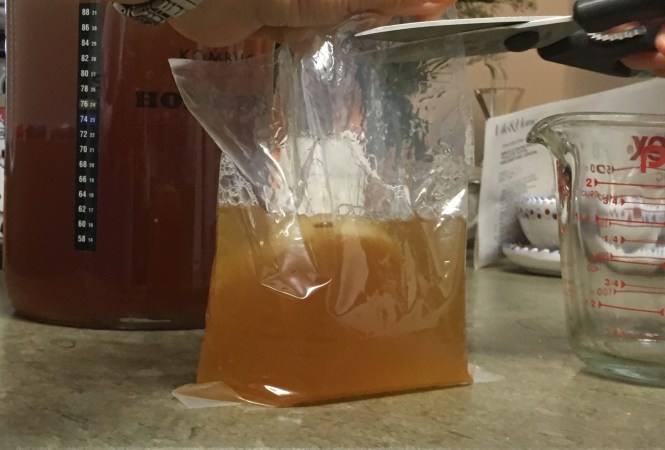
scoby and starter

If you’re buying a scoby, it will come in a plastic bag with starter liquid.

new scoby_first batch

In my first batch of kombucha, the original scoby was vertical and the new scoby developed at the surface, as it should.
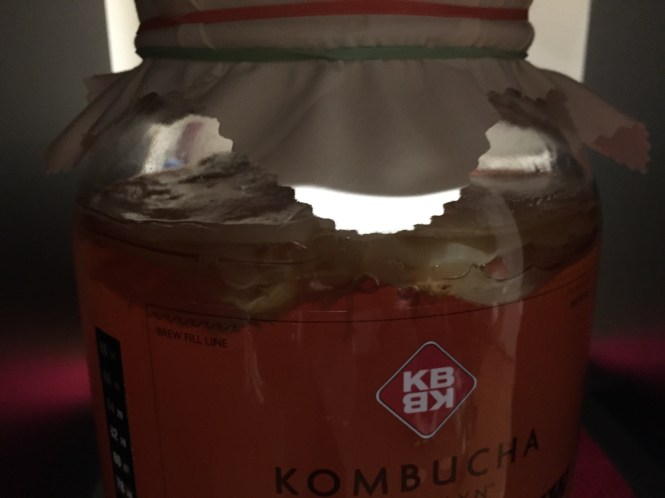
new scoby_second batch

In my second batch, I used the new scoby that was created from the original. This new scoby sat at the top and another scoby is developing right on top.
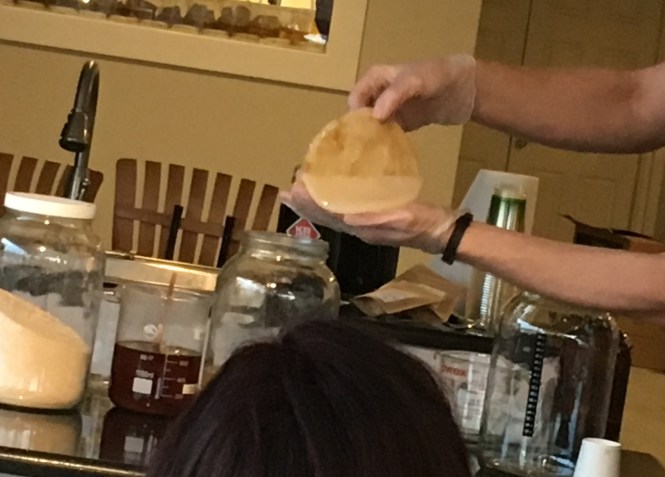
new scoby

This is a photo from class: Eric Childs at Kombucha Brooklyn is removing his picture-perfect new scoby on top from the original one. Exciting stuff!

Happy brewing!!
 

Burdock Kimpura!

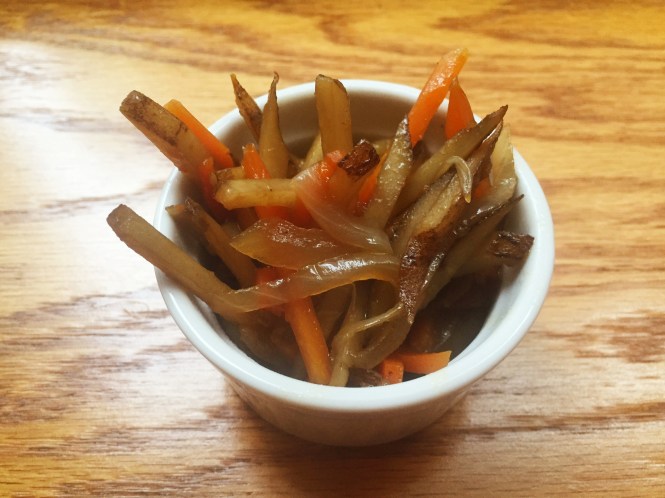
kimpura

I had never heard of burdock root before the macrobiotics class at Natural Gourmet Institute. Our chef instructor said that in culinary school, he was reprimanded for peeling it, so I always remember to leave the skin on. It looks like it should be peeled with some dirt embedded in the skin, so I usually gently use a vegetable scrub brush to get any excess dirt off. The antioxidants and flavor are concentrated near the surface, so you want to make sure you preserve the skin. The root has a unique, sweet flavor that’s complemented by the savory sesame oil and shoyu. It is believed to serve as a blood purifier and strengthen the intestines. And it’s delicious!

2 tablepoons sesame oil
burdock root (about half pound), matchstick cut
medium onion, saute slice
2 carrots, matchstick cut
2-3 tablespoons shoyu or soy sauce

1. Heat a heavy skillet and coat with sesame oil.
2. Add burdock matchsticks and saute over medium heat until they no longer release their strong aroma. Stir constantly to coat the slivers evenly with oil and prevent burning.
3. Add thinly sliced onions, then the carrot matchsticks, mixing ingredients together. Saute for 1-2 minutes, and then add enough water to cover the bottom of the pan.
4. Cover pan and reduce heat, allowing to simmer for 25-30 minutes, or until the vegetables are tender, making sure the bottom of the pan does not get dry. Uncover and add shoyu or soy sauce to taste and simmer until most of the liquid is cooked out.

Roasted Beech Mushrooms!

beech mushrooms

I have yet to find a type of mushroom that I don’t like! Mushrooms have traditionally been used as an antitumor, antifungal, and antiarthritic medicinal food. They are also full of umami, described as a savory, rich flavor and is the fifth taste, following sweet, salty, bitter, and sour. Mushrooms are a great source of B vitamins, phosphorus, magnesium, potassium, and selenium. They are the only plant that provides a natural source of vitamin D. These brown beech mushrooms, also called bunashimeji, originated in Japan and are now cultivated in the US. They are sold in clusters in the supermarket and can be found at Whole Foods and even from Fresh Direct. They take minimal effort to prepare and are absolutely delicious out of the oven! I love to put them on top of my salad to add that rich, umami flavor.

Ingredients
1 package brown beech mushrooms (bunashimeji), about 2.5 ounces
2-3 teaspoons olive oil
sea salt
pepper

Procedure
1. Preheat oven to 400 degrees F.
2. Trim bottom of mushrooms and separate them into single pieces.
3. Toss with olive oil, just enough to lightly coat them so that they will crisp up.
4. Season with sea salt and pepper.
5. Roast for about 15-20 minutes, until browned and crisp.

Collard Wraps!

collard wrap

Collard wraps are a much healthier alternative to the highly-processed flour wraps bought in the store. They are a great source of calcium and vitamin K. I prefer to eat it raw because I like the crunch, but if that’s too much, you can blanch it very quickly in hot water to make it more tender. You can pretty much fill these with anything; i’ve made a breakfast burrito before with scrambled eggs, avocado, and harissa. Today, I made mine with hummus, quinoa, spiralized beets, and some micro greens 🙂 These gained popularity in California and I have yet to see them invade NYC. Juice Press, which sells fresh pressed juices and raw food, has one filled with raw sunflower seed hummus and raw falafel, which is one of my favorites. Bareburger, which offers plenty of meat and non-meat burgers, offers the option of getting your burger wrapped in cooked collard leaves. It turns out looking like a burrito, but it is nice to have the healthy option. If you’ve never had a collard wrap, I hope you’ll give it a try!

Collard greens

Fillings of your choice (ex: hummus, quinoa, veggies..)

1. Trim the bottom stem off. Then, using a paring knife, shave the dense stalk down to about the same thickness of the leaf, so that it will roll up easily. Be careful not to tear the leaf with knife.
2. Place wrap filling in the middle and roll up from bottom to top, like a burrito, folding in the sides halfway up.
3. Slice in half with a sharp knife. Enjoy!

Black Garlic Hummus!

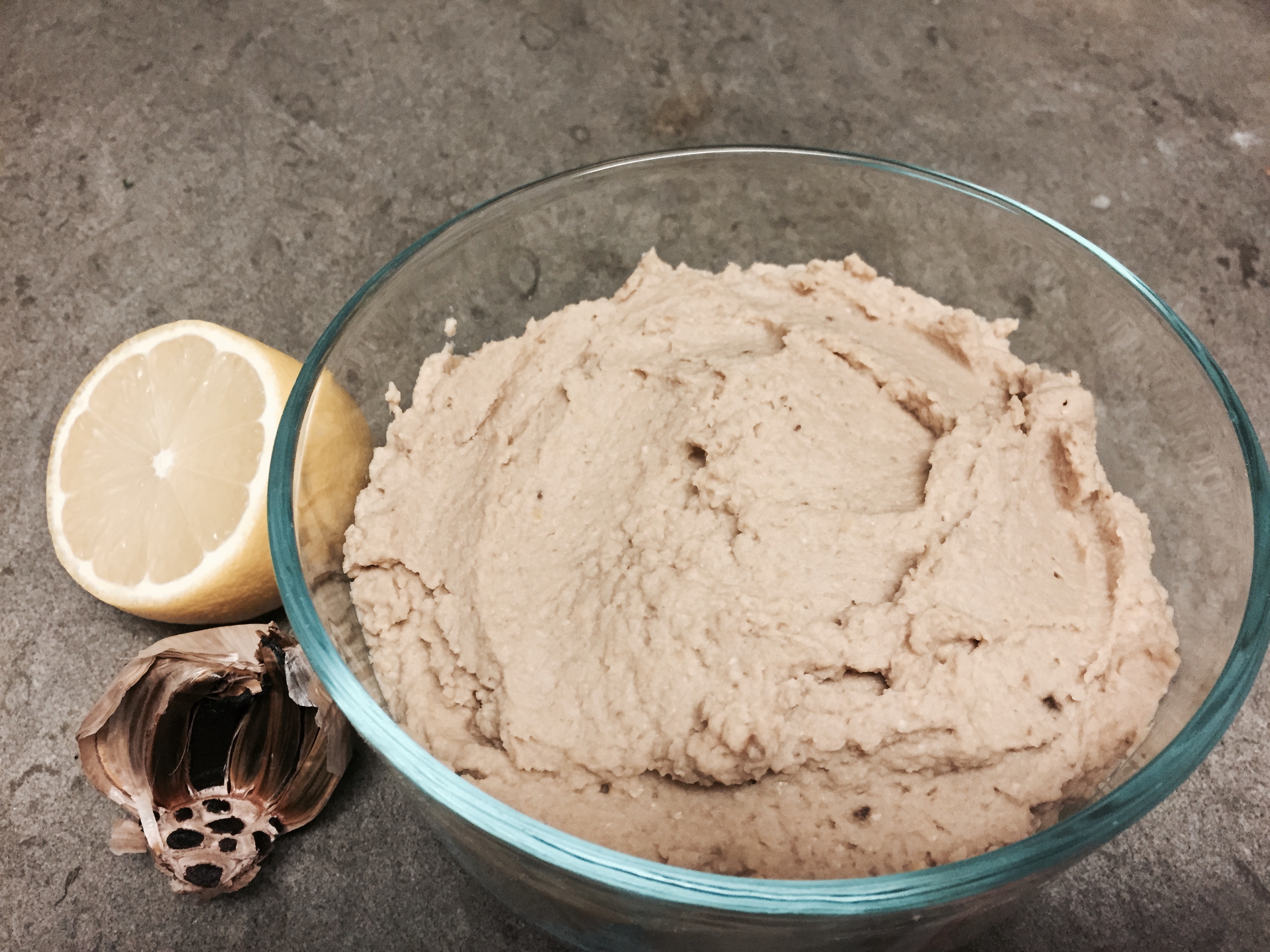
blackgarlic hummus

This was my first time using black garlic, which I purchased at my co-op. However, I’ve definitely seen it at Trader Joe’s, but I’m not sure if it’s a regular item there. I’m pretty sure you could find this in Whole Foods in the produce area. Through a month-long fermentation process, regular garlic turns into supergarlic! While regular garlic is touted for being high in antioxidants, black garlic has been shown to contain double the antioxidant properties of regular garlic. Not only is it more nutritious, but it is richer and sweeter, with a melt-in-your-mouth consistency. The flavor really enhances this hummus and would work really well in other dips, spreads, and sauces.

2 15 oz cans of chickpeas or 3 cups of cooked chickpeas
½ head of black garlic, peeled
1 teaspoon lemon juice
½ teaspoon salt
Olive oil

1. Drain the beans and place into a food processor with the black garlic, salt, and lemon juice.
2. Pulse several times to combine, scraping down the sides as you go.
3. While the food processor is on, drizzle in olive oil to desired consistency.

Shaved Fennel Salad

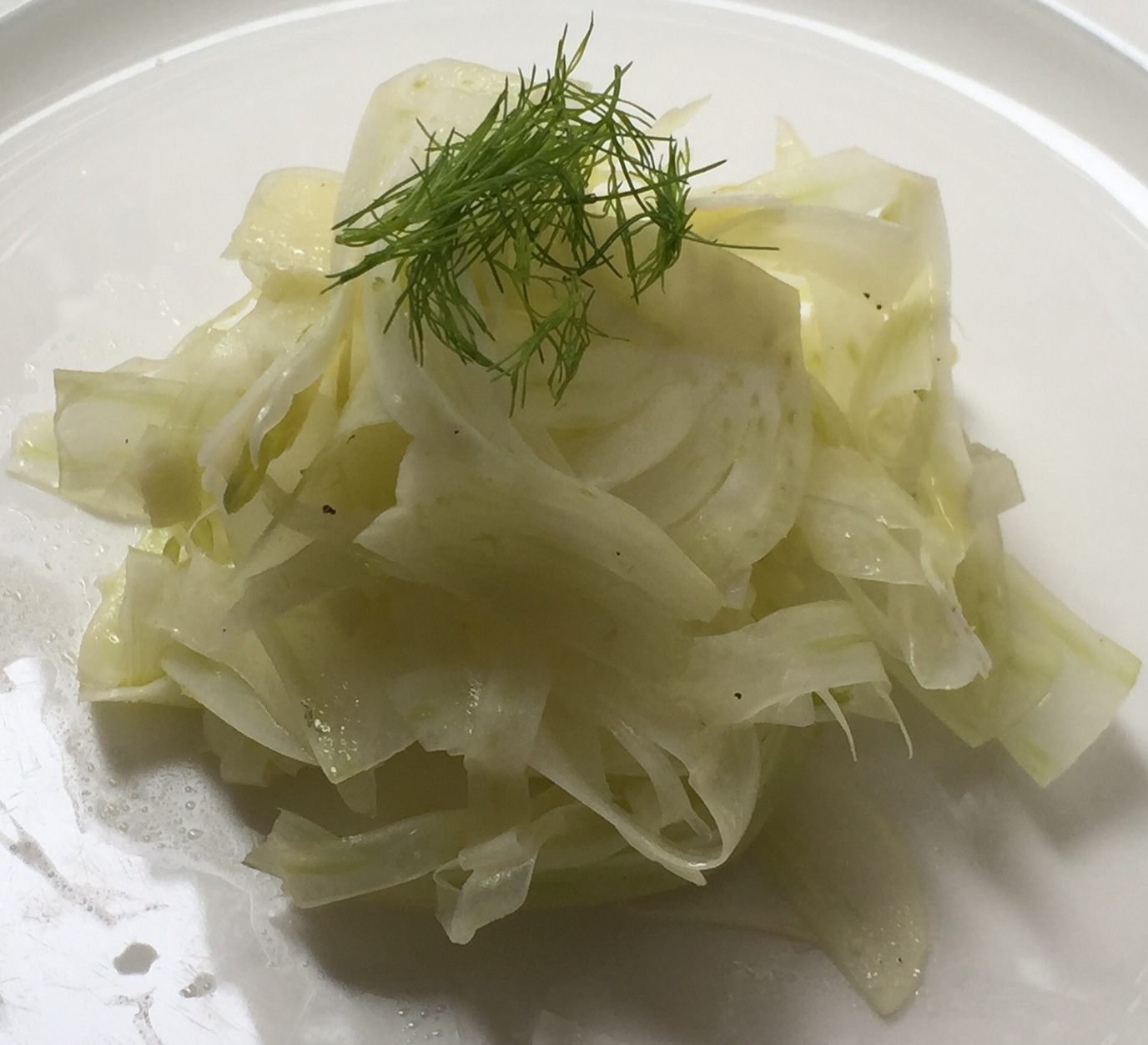
fennel salad

This salad is so beautifully simple, light, and delicious, a welcome break from all of the heavy winter squash salads. The few ingredients really highlight the fennel and make it great as an appetizer with mixed greens or as a side dish. The best way to thinly slice the fennel is on a mandoline.  Fennel is a good source of Vitamin C, potassium, and folate. It also has phytonutrients that have been shown to reduce inflammation and prevent cancer. We are also in peak fennel season right now  (fall through early spring). Serve this at your next dinner party!

Yield: about 2 servings

Ingredients:
1 fennel bulb, cored and thinly sliced (save fronds for garnish)
Parmigiano-Reggiano cheese
1 tablespoons extra-virgin olive oil
1/2 tablespoon fresh lemon juice
Kosher salt and freshly ground pepper

Procedure:
1. Place fennel in a medium bowl. Using a sharp vegetable peeler, shave the Parmesan in thin shards over the fennel.
2. Add the olive oil, lemon juice, and salt and pepper to taste. Toss the salad gently, then adjust the seasoning with more salt and pepper if necessary. Shave more Parmesan on top, sprinkle with the fennel fronds, and serve immediately.

Cancer-Fighting Crucifers!

brussels sprouts

Brussels sprouts and wasabi are cruciferous plants, like kale and broccoli, which means that they have phytochemicals that have been shown to repair DNA cells and even block the growth of cancer cells. I usually simply roast brussels sprouts in the oven with olive oil, salt, and pepper, but when I came across this recipe with wasabi and miso, I was intrigued. The wasabi packs a punch and will surely clear your nasal passages! I love this recipe and have already made it a few times in the last month.

Brussels Sprouts Salad

Ingredients:

1 pound brussels sprouts

2 green onions, sliced

Miso Dijon Sauce:

1 tablespoon white miso

1 teaspoon Dijon mustard

2 teaspoons pure water

¼ teaspoon wasabi powder

1 teaspoon avocado oil 

Procedure:

1. Wash and slice Brussels sprouts into strips with chef’s knife. If you have a food processor, save time by running your sprouts through the shredder blade. Place them in large glass bowl.

2. In a small bowl, mix together sauce ingredients. Set aside.

3. Heat skillet to medium-high and then add oil. Place sliced green onion and brussels sprouts into pan. Sear veggies for 2 to 3 minutes and then stir. Sear another 3 minutes and then stir. Repeat one more time and remove from heat.

4. Fold in sauce. Serve warm.