Quinoa Tabouli!

tabouli

Quinoa is one of the few plant-based, complete protein foods, which means that it contains an adequate proportion of all nine essential amino acids. Some of the vitamins and minerals that are abundant in quinoa include vitamin E, B vitamins, zinc, potassium, phosphorus, magnesium, and iron. It’s a great source of protein, with a half-cup serving providing 4 grams of protein! This superfood is used instead of the traditional bulgur (cracked wheat), which makes it ideal for a gluten-free diet. Tabouli is one of my favorite dishes to make and is so refreshing with lots of parsley, mint, and lemon.

1 cup quinoa, rinsed
1⁄2 cup lemon juice (about 3 lemons)
1⁄4 cup extra virgin olive oil
1⁄2 teaspoon sea salt
2 plum tomatoes, seeded and cut into small dice
1 bunch parsley, chopped
1⁄2 bunch mint, chopped
4 scallions, thinly sliced
4 ribs celery, cut into small dice
Sea Salt and pepper, to taste

1. Cook quinoa according to package instructions.
2. In large bowl, whisk together lemon juice, olive oil, and salt. While quinoa is still warm, toss with dressing. Let sit until it reaches room temperature.
3. Add remaining ingredients and mix well. Enjoy!

Cauliflower Fried “Rice”

cauliflower fried rice

This is such a brilliant way to make a healthy fried “rice.” No wonder it’s gone viral on food sites! The recipe is pretty basic and can be customized with whatever veggies or leftovers you happen to have in the house. Cauliflower is a cancer-fighting crucifer and an excellent source of Vitamins C and K. This is a fried rice that you won’t feel guilty about having seconds of! If you’re watching your carb intake, this is a really satisfying dish without the heaviness of your typical takeout. Also, you can process the cauliflower into “rice” and freeze, so that it’s ready to go anytime. Enjoy!

Ingredients:
1 head cauliflower, rinsed and cut into small florets
1 tbsp sesame oil
1 small onion, diced small
1 cup frozen peas
2 carrots, peeled and diced
2 garlic cloves, minced
½ bunch scallions, thinly sliced, whites and greens separated
3 tbsp soy sauce, or more to taste (Tamari for Gluten Free)

Procedure:
1. Allow cauliflower to dry completely. In a food processor, place as many florets that fit in a single layer and process until size of rice. Do not over process; otherwise, it will end up mushy. Set aside and repeat with the remaining cauliflower.
3. Heat a large saute pan or wok over medium heat and add sesame oil.
4. Saute onions, scallion whites, peas, carrots, and garlic about 3 to 4 minutes, or until soft.
5. Raise the heat to medium-high. Add the cauliflower “rice” to the saute pan along with soy sauce. Mix, cover and cook approximately 5 minutes, stirring frequently, until the cauliflower is slightly crispy on the outside but tender on the inside.
6. Remove from heat and mix in scallion greens.

Blistered Shishito Peppers!

shishito peppers

In the office this past week, I overheard some guys talking about shishito peppers and how one of them was trying to grow them in his garden. He was eating them by the bowlful and thought it would be more economical to grow his own. I had been intrigued about these peppers in the past, but never really got around to trying them until today. I bought some at my coop this morning and then noticed them in Trader Joe’s too! These Japanese peppers are high in vitamins A and C. They’re generally not spicy peppers, but about one out of every ten is spicy (mild), which is actually a pleasant surprise. Unlike jalapenos, they are thin-walled, so they cook very quickly on the stove and are best eaten while still warm. Eat the entire pepper, except the stem. They’re delicious, making it easy to polish off the entire bowl, like I did. They make for a quick appetizer or snack, and even a nice side dish for brunch!

Ingredients:
2 teaspoons sesame oil
6 ounces shishito peppers
sea salt
1/2 teaspoon toasted sesame oil
1/2 teaspoon soy sauce
1/2 teaspoon toasted sesame seeds

Procedure:
1. In a large dutch oven, over high heat, add sesame oil.
2. When hot, add shishito peppers and a pinch of salt. Toss to combine.
3. Saute for 4-5 minutes, stirring frequently, until the peppers are mostly blistered on all sides.
4. Toss with sesame oil and soy sauce until the peppers are evenly coated, and sprinkle with sesame seeds.
5. Serve warm. Enjoy!

Roasted Beech Mushrooms!

beech mushrooms

I have yet to find a type of mushroom that I don’t like! Mushrooms have traditionally been used as an antitumor, antifungal, and antiarthritic medicinal food. They are also full of umami, described as a savory, rich flavor and is the fifth taste, following sweet, salty, bitter, and sour. Mushrooms are a great source of B vitamins, phosphorus, magnesium, potassium, and selenium. They are the only plant that provides a natural source of vitamin D. These brown beech mushrooms, also called bunashimeji, originated in Japan and are now cultivated in the US. They are sold in clusters in the supermarket and can be found at Whole Foods and even from Fresh Direct. They take minimal effort to prepare and are absolutely delicious out of the oven! I love to put them on top of my salad to add that rich, umami flavor.

Ingredients
1 package brown beech mushrooms (bunashimeji), about 2.5 ounces
2-3 teaspoons olive oil
sea salt
pepper

Procedure
1. Preheat oven to 400 degrees F.
2. Trim bottom of mushrooms and separate them into single pieces.
3. Toss with olive oil, just enough to lightly coat them so that they will crisp up.
4. Season with sea salt and pepper.
5. Roast for about 15-20 minutes, until browned and crisp.

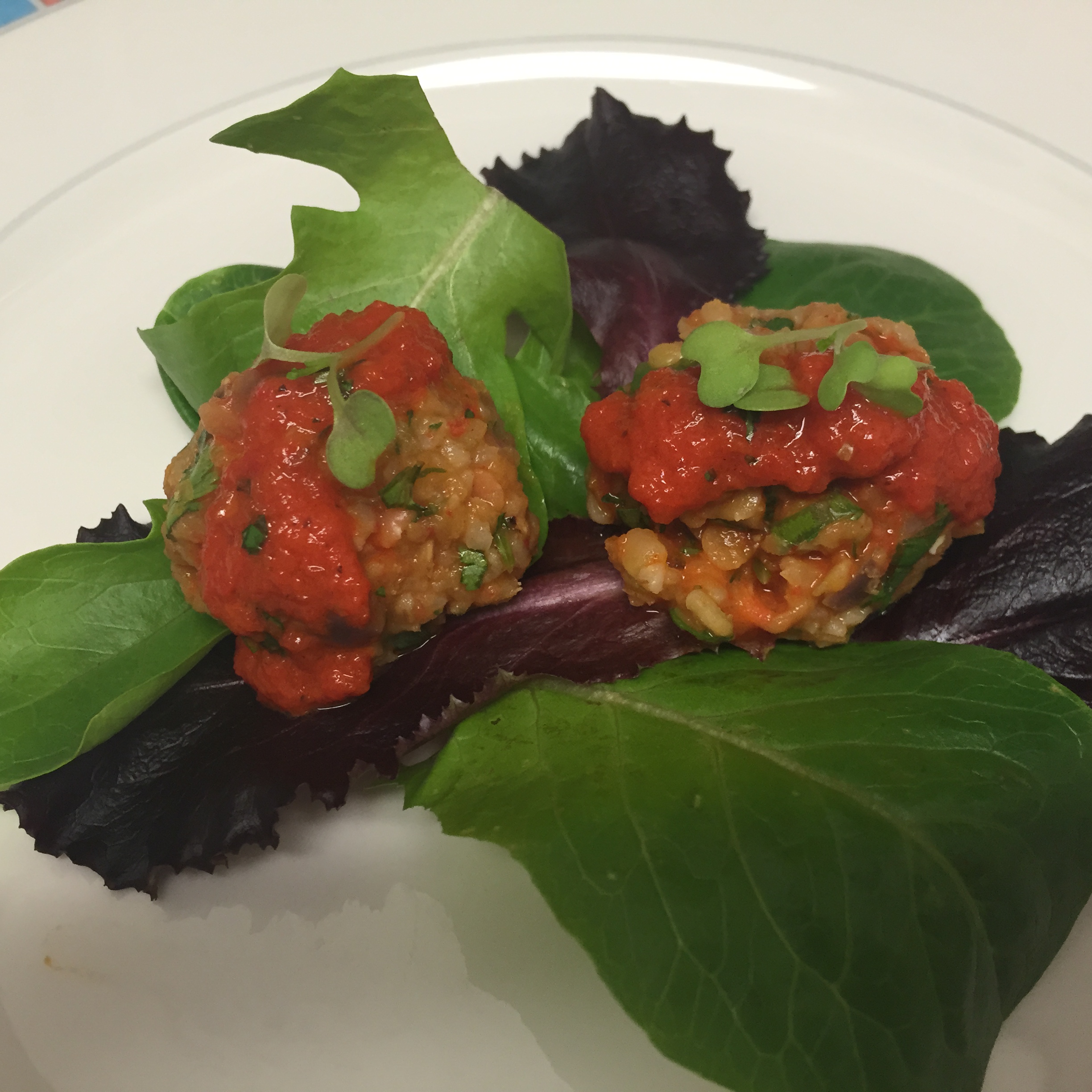
Red Lentil-Bulgur Lettuce Wraps with Roasted Red Pepper Sauce!

red lentil-bulgur

Lentils are a good low-fat source of protein as well as copper and magnesium, which are necessary for energy production and healthy bone tissue. Red lentils cook particularly fast compared to other lentils, since they are split. Since red lentils are not a complete protein on their own, the addition of bulgur to this recipe makes the combination a complete protein. The red pepper paste is done in no time in a food processor or powerful blender and truly delicious. The lemon juice, cilantro, and scallion really brighten up the lentils. The entire recipe is incredibly easy for a quick weeknight meal and would be perfect for a meatless Monday! 🙂

For the Quick Red Pepper Paste:
1 12-ounce jar roasted red peppers, drained
1 teaspoon smoked paprika
1/2 teaspoon red pepper flakes
2 tablespoons olive oil
For the lentil tabouli:
1 tablespoon olive oil
1 red onion, finely chopped
4 garlic cloves, minced
1/2 cup Quick Red Pepper Paste, separated
1 teaspoon ground cumin
1/2 teaspoon smoked paprika
1 cup red lentils
2 cups vegetable broth
1 teaspoon sea salt
1/2 cup bulgur wheat
2 pieces of scallion, thinly sliced
1 bunch cilantro, finely chopped
juice of 1 lemon
Freshly ground black pepper

Bibb lettuce or Boston lettuce (optional)

Instructions:
1. To make the Quick Red Pepper Paste: In a food processor, or blender, blend the red peppers with the smoked paprika, red pepper flakes, olive oil, and a pinch of salt until it forms a thin paste or sauce. Leftover paste may be refrigerated in a covered container for up to 1 week.
2. To make the lentil tabouli: In a 2-quart or larger saucepan, heat the olive oil and cook the red onion and garlic over medium heat for 5 minutes, or until soft and fragrant. Add 1/4 cup of the red pepper paste, the cumin, and paprika, and sauté for 30 seconds.
3. Stir in the red lentils and pour in 2 cups broth and 1 teaspoon salt. Bring to a boil, then simmer for 10 minutes or until the lentils have softened. Stir in the bulgur wheat. Remove from the heat and cover the pan. Let the lentils and bulgur rest for 20 minutes, or until the mixture is thick and soft.
4. Stir in an additional 1/4 cup red pepper paste, as well as the scallions, cilantro, lemon juice, and a generous quantity of black pepper. Taste and add more salt and pepper if desired. Set aside to cool.
5. When the lentil mixture has cooled, form it into walnut-sized balls. Place one or two lentil balls or a dollop of lentil mixture in the center of a lettuce leaf, drizzle with roasted red pepper sauce, and roll up the lettuce or pinch it closed like a taco to eat.
7. Eat immediately or refrigerate the lentil mixture for up to 3 days.

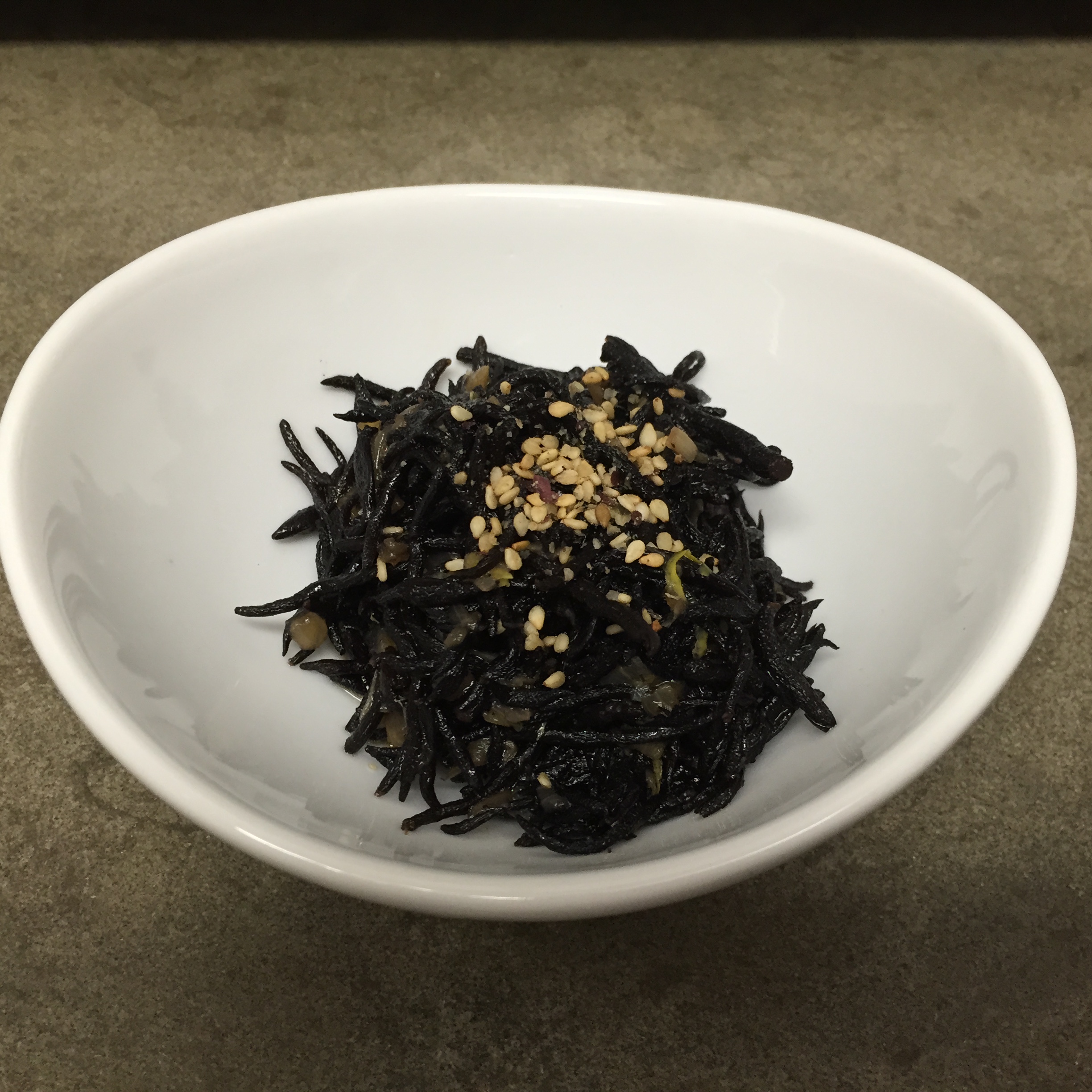
Hiziki with Lemon!

hiziki

As long as I can remember, I’ve always loved seaweed in all forms. As kids, my brothers and I used to eat the dried, roasted nori strips as snacks. The green seaweed salad at Japanese restaurants was always and still is a favorite side dish. In Chinese restaurants, you can find kombu seaweed salad that is a very dark green, usually prepared with lots of garlic. My mom used to tell us that eating seaweed would make our hair darker (Japanese folklore)! In culinary school, we learned about all types of seaweed in our sea vegetables class. As it turns out, hiziki is the most nutrient dense! It became more widely available in the US during the macrobiotic movement. It’s high in fiber as well as essential minerals, including calcium, iron, and magnesium. Hope you enjoy this simple recipe!

1 cup dried hiziki (rinsed and soaked 15-20 minutes)
1 small onion, small dice
2 teaspoons sesame oil
2-3 tablespoons shoyu or soy sauce
1 lemon, zested and juiced

1. Drain off any remaining soaking water from hiziki and discard.
2. In a large saute pan, saute onion in sesame oil for 3 to 5 minutes. Add hiziki, mixing well.
3. Add enough water to just barely cover hiziki. Add shoyu or soy sauce. Bring to a boil. Cover, lower the heat, and simmer for about 30 minutes. Remove cover and cook until most liquid has evaporated.
4. Gently stir in lemon juice and zest until well mixed. Serve.

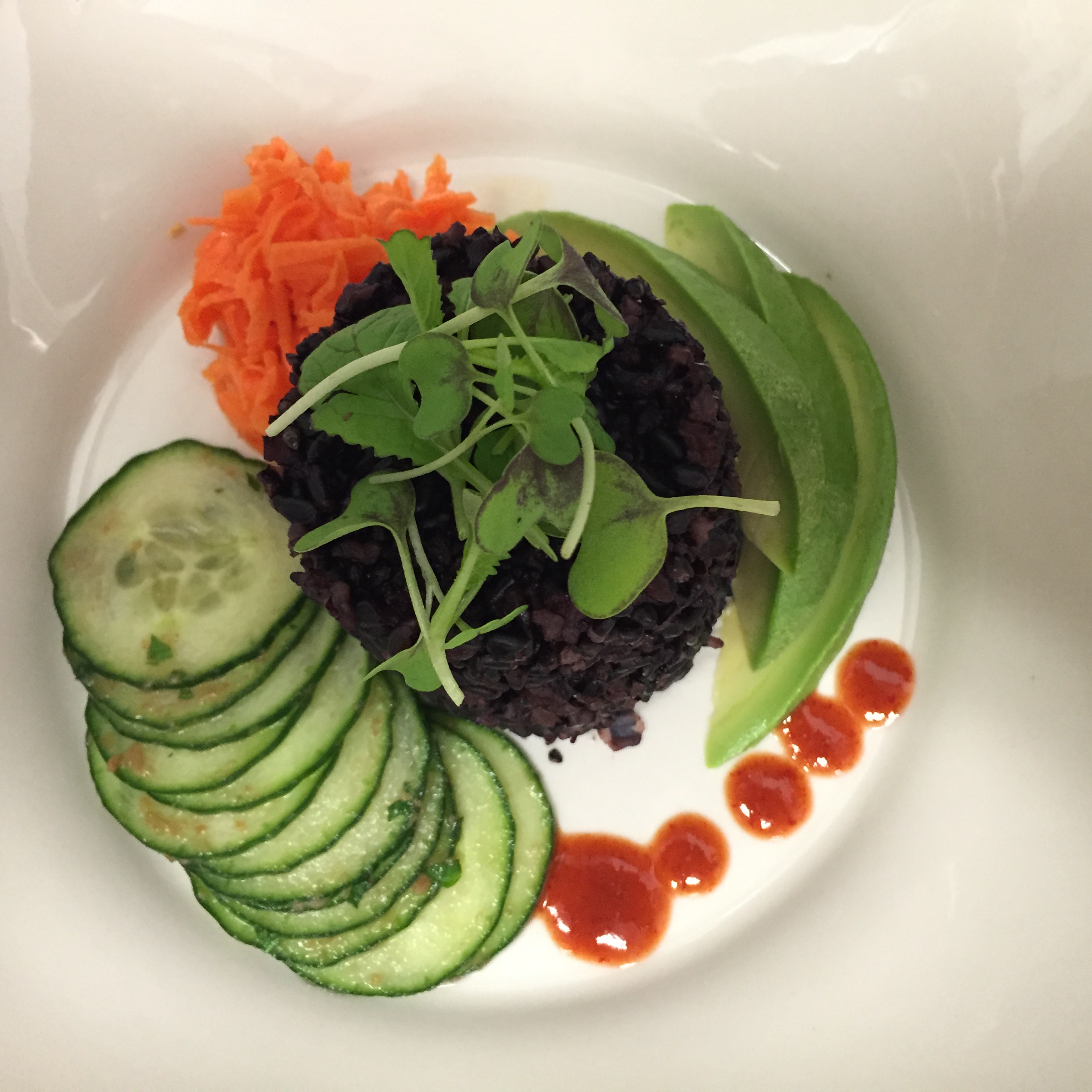
Bibimbap!

bibimbap

This is my modernized version of bibimbap, made with forbidden black rice. According to legend, this rice was only to be consumed by the emperors of ancient China and “forbidden” to the general public. Black rice has a sticky texture and slightly nutty flavor. Not only does it look beautiful, but it has the most protein of any type of rice and double the fiber of brown rice! When cooked, it turns a deep purple, indicating that it contains powerful phytochemicals that are believed to fight cancer, heart disease, and lower cholesterol. This superfood also contains more antioxidants than blueberries! Cook as you would any other type of rice.

Tonight, I also made a quick cucumber salad with an umeboshi dressing. Umeboshi paste is made from umeboshi plums that are pickled by packing them in sea salt and shiso leaves for about 6 months. In Asian medicine, they are used to treat various maladies. They are believed to relieve hangovers, stomach distress, morning sickness, and fatigue. Since they are high in sodium, they may not be ideal for anyone with high blood pressure.

Cucumber Salad with Umeboshi Dressing

Ingredients
1 tablespoon umeboshi paste
1 tablespoon mirin
8-10 mint leaves, finely chopped
1 english cucumber, thinly sliced

Directions
1. Whisk together the umeboshi paste, mirin, and mint in a large bowl.
2. Toss the sliced cucumbers with the dressing until the cucumbers are well coated.
3. Enjoy!

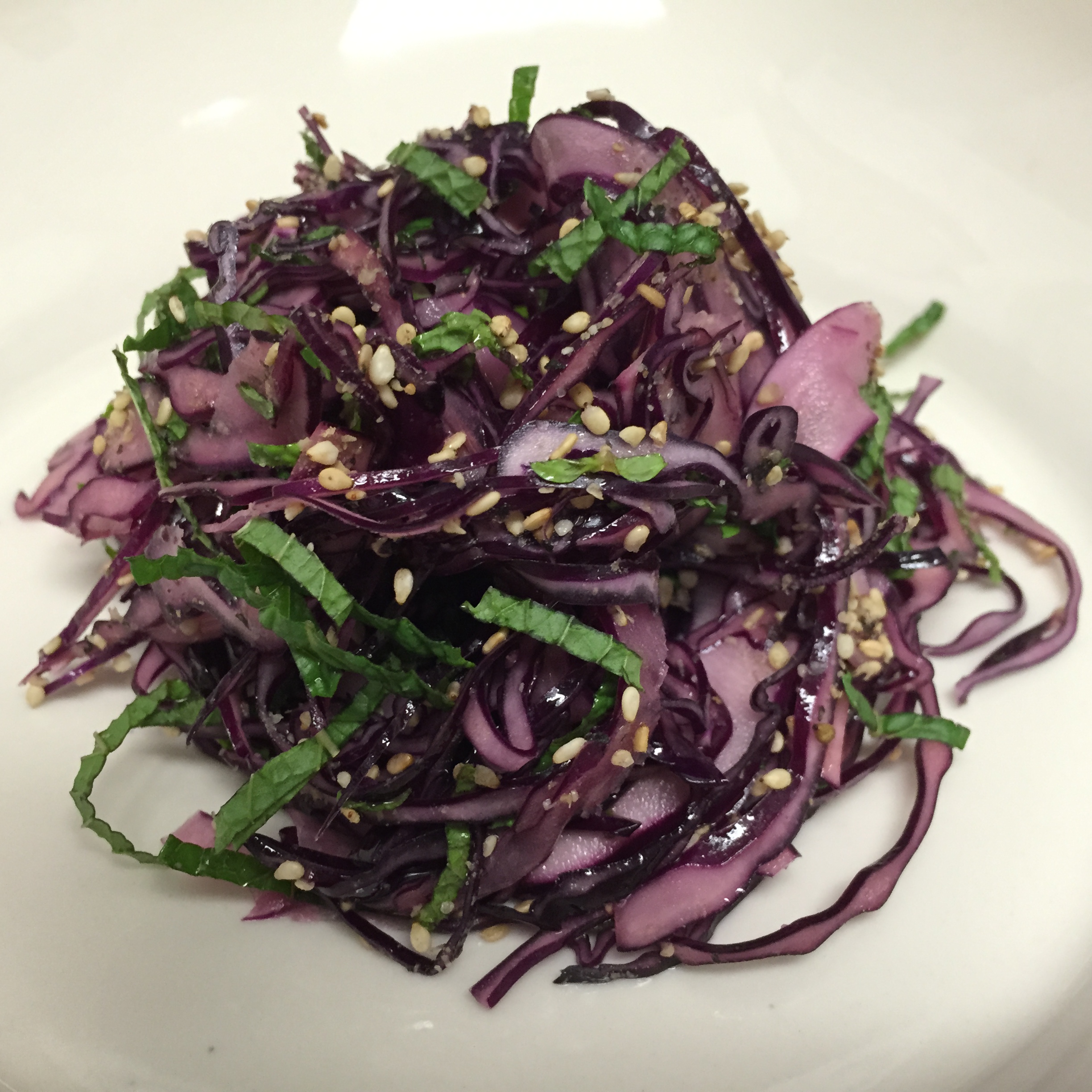
Asian Red Cabbage Slaw with Mint!

asian red cabbage slaw

After making the red cabbage and carrot slaw earlier in the week, I still had half a head of red cabbage and leftover mint in the fridge. I didn’t have a lot to work with and was too tired to head out to the supermarket, so this was the perfect recipe! Not until culinary school was I introduced to gomasio, which is a dry condiment made from toasted sesame seeds, sea salt, and seaweed. In Japanese cuisine, it is often sprinkled over plain rice. As part of a macrobiotic diet, it is used as the healthier alternative to ordinary salt. The slaw would be refreshing on fish tacos! The vinaigrette is very versatile and I could see it being delicious for a summer cucumber salad 🙂

½ head red cabbage, thinly sliced
¼ bunch mint, chiffonade
1 teaspoon gomasio or toasted sesame seeds (garnish)

Sesame Vinaigrette:
3 tablespoons rice vinegar
2 tablespoons soy sauce
2 tablespoons sesame oil
1 tablespoon honey

Instructions:
1. In a large bowl, whisk together vinaigrette ingredients.
2. Add cabbage and mint, making sure dressing is evenly distributed.
3. Sprinkle with gomasio or sesame seeds before serving. Enjoy!

Red Cabbage & Carrot Slaw!

red cabbage and carrot slaw

One of my friends shared this recipe with me a couple of years ago and I’ve been making it ever since! Red cabbage is such a beautiful, vibrant purple, indicating its high concentration of antioxidants. It’s not only a good source of Vitamin C, but has 10 times more Vitamin A and twice as much iron as green cabbage. For this slaw, I prefer to use the mandolin over the food processor to get it thinner, allowing it to be more tender. The carrots are easily shredded by hand with a box grater or very quickly in the food processor, which is what I did today. Toasting the pumpkin seeds really gives them a greater depth of flavor and extra crunch, which is welcoming in this slaw. I choose to just sprinkle them on top, so that they won’t get soggy. This would be perfect to bring to a bbq or spring/summer potluck. Enjoy!

1/2 red cabbage, thinly sliced
4 carrots, peeled and grated
4 sprigs fresh mint, chiffonade*
2 tablespoons pumpkin seeds, toasted

Dressing:
¼ cup extra-virgin olive oil
1 lemon, zested and juiced
1/8 teaspoon cinnamon
1/8 teaspoon ground cumin
1 teaspoon honey
½ teaspoon salt

Directions:
1. In a large bowl, whisk dressing ingredients together.
2. Add cabbage and carrots to bowl and toss, ensuring dressing is evenly distributed.
3. Add mint and gently toss again
4. Sprinkle toasted pumpkin seeds on top and extra mint, if desired, for garnish.

*chiffonade is just a fancy way of saying to cut into thin strips or ribbons. Pick the mint leaves off the sprigs, lay them on top of each other (10 at a time), roll lengthwise, and slice into thin strips.

Mustard-Roasted Cauliflower!

mustard-roasted cauliflower

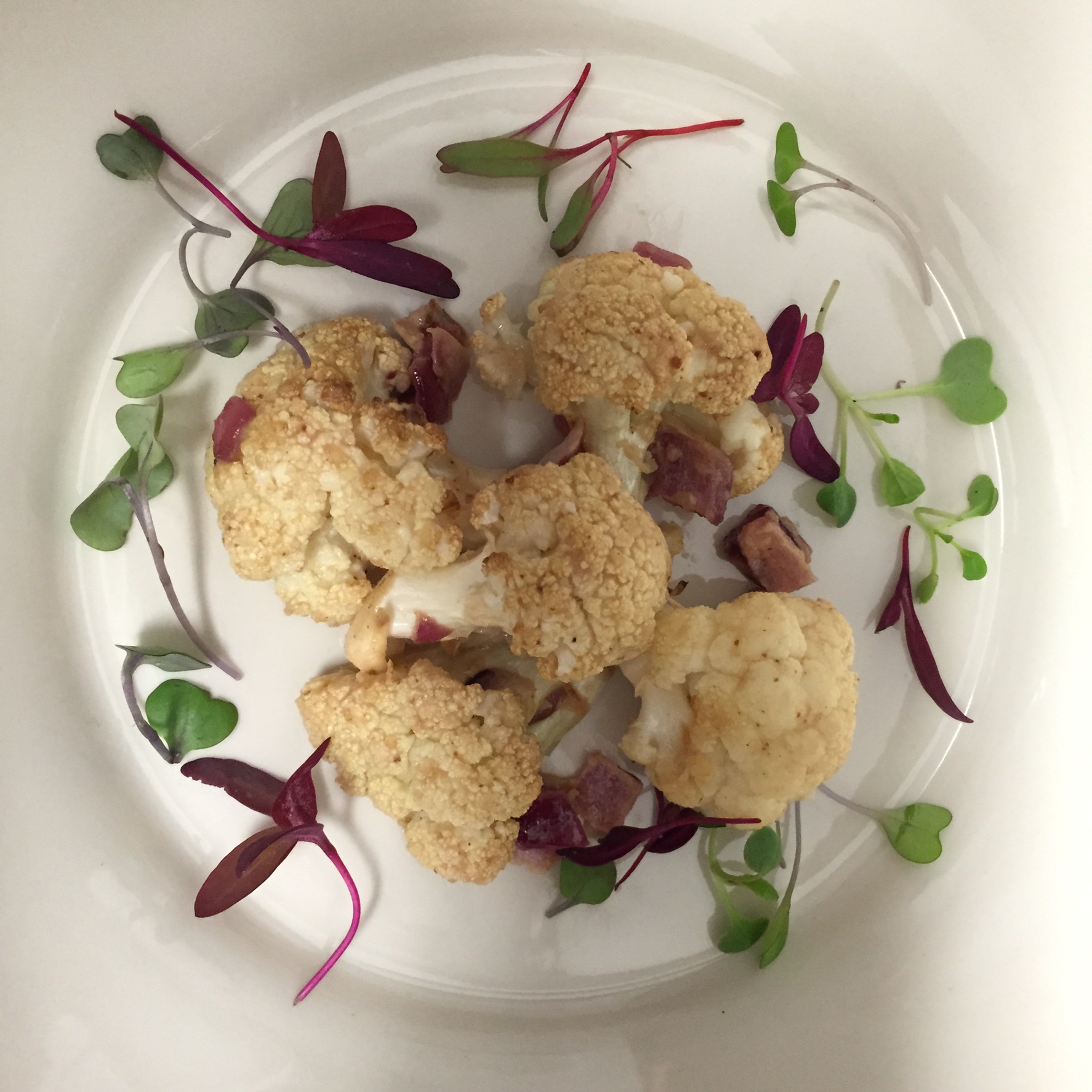
The roasted cauliflower absorbs the mustardy vinaigrette, hot from the oven. It’s a warming and healthful dish, as we seem to be caught in between winter and spring these days. Cauliflower, like other cruciferous veggies, is associated with a lower risk of some cancers. It is only second to broccoli in its level of glucosinolates, which activate the body’s detoxification system. Now is the perfect time to detox through clean eating in order to be beach-ready! 🙂

1 large head of cauliflower, cut into medium-sized florets
1 red onion, small dice
2 tablespoons olive oil, divided
1 tablespoon Dijon mustard
1 teaspoon stone ground mustard
1 tablespoon red wine vinegar
Sea salt
Black pepper

1. Preheat the oven to 425° F.
2. For the vinaigrette: Whisk together the Dijon mustard, stone ground mustard, and red wine vinegar.
3. Spread the cauliflower and red onion out evenly on a large baking sheet. Toss with 1 tablespoon of olive oil and season with salt and pepper. Roast the cauliflower for 25 to 30 minutes, stirring and rotating the pan halfway, until lightly browned and tender.
4. Whisk the remaining tablespoon of olive oil into the vinaigrette and toss with the cauliflower as soon as it comes out of the oven. (It’s important to dress the cauliflower while it is still warm.) Season with additional salt and pepper, if necessary. Serve immediately.

Adapted from the Food52 recipe

Purple Asparagus Salad!

asparagus salad

Asparagus is a sign of spring to me, so when I saw purple asparagus at the coop, I had to have it! I love my purple veggies (carrots, cauliflower, broccoli, kale..). Asparagus is a rich source of folates, B vitamins, antioxidants, and vitamin K. This recipe is so easy and doesn’t require any cooking. The simplicity allows the star ingredient to really shine and the asparagus ribbons are beautiful.

2 tablespoons avocado oil or olive oil
2 tablespoons lemon juice
1 teaspoon dijon mustard
pinch of salt
1 bunch purple asparagus, trimmed

1. Whisk together the first 4 ingredients in a large bowl.
2. Cut off asparagus tips and halve lengthwise. Then use the peeler to shave the rest of the asparagus spear into thin strips.
3. Add asparagus to dressing and toss well, making sure each piece is lightly coated.

Truffled Celery Root-Cauliflower Puree

celery root-cauliflower puree

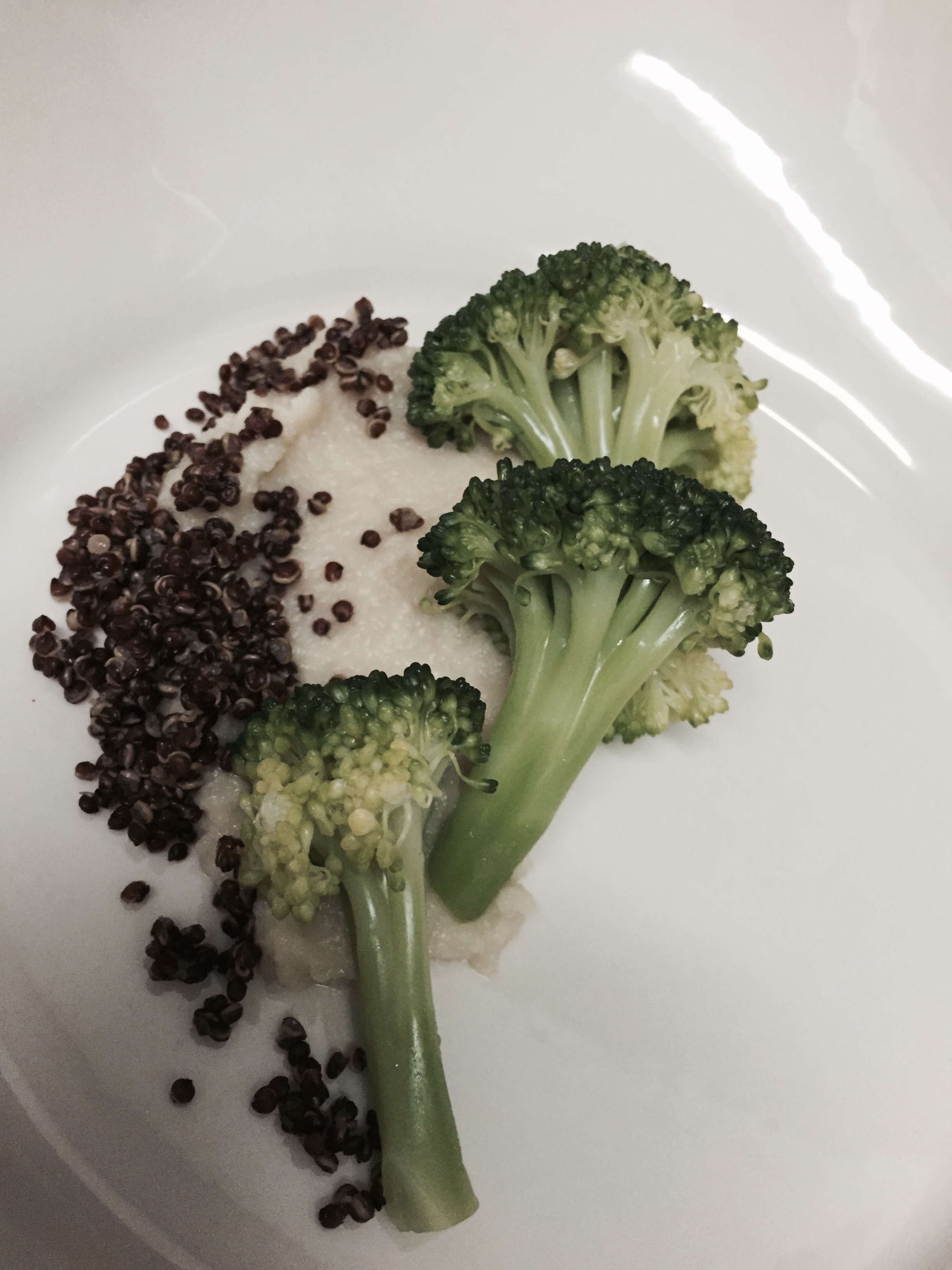
Celery root belongs to the carrot family and has a mild celery flavor, with a rather knobby appearance. It is a good source of vitamin K and phosphorus, while cauliflower is high in vitamin C and antioxidants. Puree these together with truffle oil and the result is a silky, luxurious puree that will beat out mashed potatoes any day!

Truffled Celery Root-Cauliflower Puree

1 celery root (aka celeriac), peeled and diced
1 head of cauliflower, cut into florets
1 quart veggie broth
2 cloves of black garlic or 1 clove of roasted garlic (optional)
2 tablespoons truffle oil
sea salt

1. In a large pot, add celery root, cauliflower, and broth. Allow to steam for 15-20 minutes, until the vegetables are very tender.
2. Drain and reserve liquid. This flavorful broth can be repurposed to cook grains or as a soup base.
3. Add veggies to food processor with garlic, truffle oil, and sea salt. Puree until smooth.

Mejadra!

Mejadra

Last night, I was stuck working at the restaurant, as it’s one of the busiest nights of the year. But there was a silver lining in that I made this deliciously comforting recipe 🙂 It’s packed with warming spices and the lentils and rice form a complete protein together. I must admit that I couldn’t help filling up my tasting spoon a few times to make sure it was good 😛 I was so taken by the recipe, that I made it this morning in my apartment! This is true healthy, comfort food..hope you enjoy!

1 cup coconut oil
8 shallots, thinly sliced
1 ¼ cups cooked green or brown lentils
2 tsp cumin seeds
1½ tbsp coriander seeds
1 cup basmati rice
2 tbsp olive oil
½ tsp ground turmeric
1½ tsp ground allspice
1½ tsp ground cinnamon
1 tsp sugar
Salt and black pepper
1 ¾ cups water

1. Heat the coconut oil in a medium-size heavy-based saucepan. When very hot, carefully add the shallots in batches. Fry, until the onion takes on a nice, golden-brown color and turns crispy. Transfer to sheet tray, lined with paper towels and sprinkle with salt.
2. Wipe clean the saucepan in which you fried the shallots and drop in the cumin and coriander seeds. Place over a medium heat and toast the seeds for a minute or two. Add the rice, olive oil, turmeric, allspice, cinnamon, sugar, half a teaspoon of salt and plenty of black pepper. Stir to coat the rice with oil, then add the cooked lentils and water. Bring to a boil, cover and simmer on very low heat until rice is cooked through, about 30 minutes.
3. Stir in half of the shallots and garnish with the remaining. Enjoy!

Note: This is adapted from Chef Yotam Ottolenghi’s mejadra recipe. He’s a genius!

Shaved Fennel Salad

fennel salad

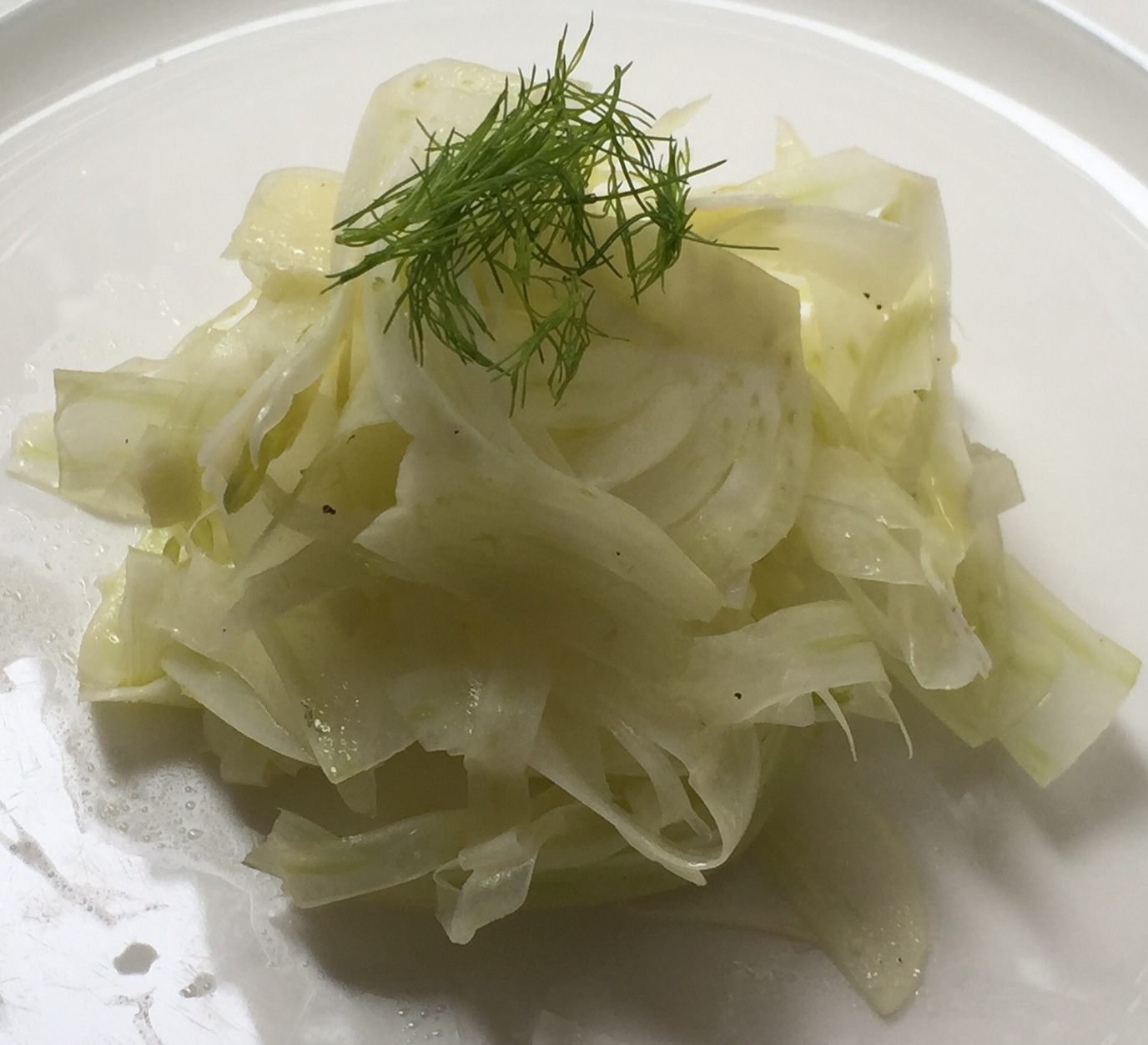
This salad is so beautifully simple, light, and delicious, a welcome break from all of the heavy winter squash salads. The few ingredients really highlight the fennel and make it great as an appetizer with mixed greens or as a side dish. The best way to thinly slice the fennel is on a mandoline.  Fennel is a good source of Vitamin C, potassium, and folate. It also has phytonutrients that have been shown to reduce inflammation and prevent cancer. We are also in peak fennel season right now  (fall through early spring). Serve this at your next dinner party!

Yield: about 2 servings

Ingredients:
1 fennel bulb, cored and thinly sliced (save fronds for garnish)
Parmigiano-Reggiano cheese
1 tablespoons extra-virgin olive oil
1/2 tablespoon fresh lemon juice
Kosher salt and freshly ground pepper

Procedure:
1. Place fennel in a medium bowl. Using a sharp vegetable peeler, shave the Parmesan in thin shards over the fennel.
2. Add the olive oil, lemon juice, and salt and pepper to taste. Toss the salad gently, then adjust the seasoning with more salt and pepper if necessary. Shave more Parmesan on top, sprinkle with the fennel fronds, and serve immediately.

Cancer-Fighting Crucifers!

brussels sprouts

Brussels sprouts and wasabi are cruciferous plants, like kale and broccoli, which means that they have phytochemicals that have been shown to repair DNA cells and even block the growth of cancer cells. I usually simply roast brussels sprouts in the oven with olive oil, salt, and pepper, but when I came across this recipe with wasabi and miso, I was intrigued. The wasabi packs a punch and will surely clear your nasal passages! I love this recipe and have already made it a few times in the last month.

Brussels Sprouts Salad

Ingredients:

1 pound brussels sprouts

2 green onions, sliced

Miso Dijon Sauce:

1 tablespoon white miso

1 teaspoon Dijon mustard

2 teaspoons pure water

¼ teaspoon wasabi powder

1 teaspoon avocado oil 

Procedure:

1. Wash and slice Brussels sprouts into strips with chef’s knife. If you have a food processor, save time by running your sprouts through the shredder blade. Place them in large glass bowl.

2. In a small bowl, mix together sauce ingredients. Set aside.

3. Heat skillet to medium-high and then add oil. Place sliced green onion and brussels sprouts into pan. Sear veggies for 2 to 3 minutes and then stir. Sear another 3 minutes and then stir. Repeat one more time and remove from heat.

4. Fold in sauce. Serve warm.

Cauliflower Couscous!

cauliflower couscous

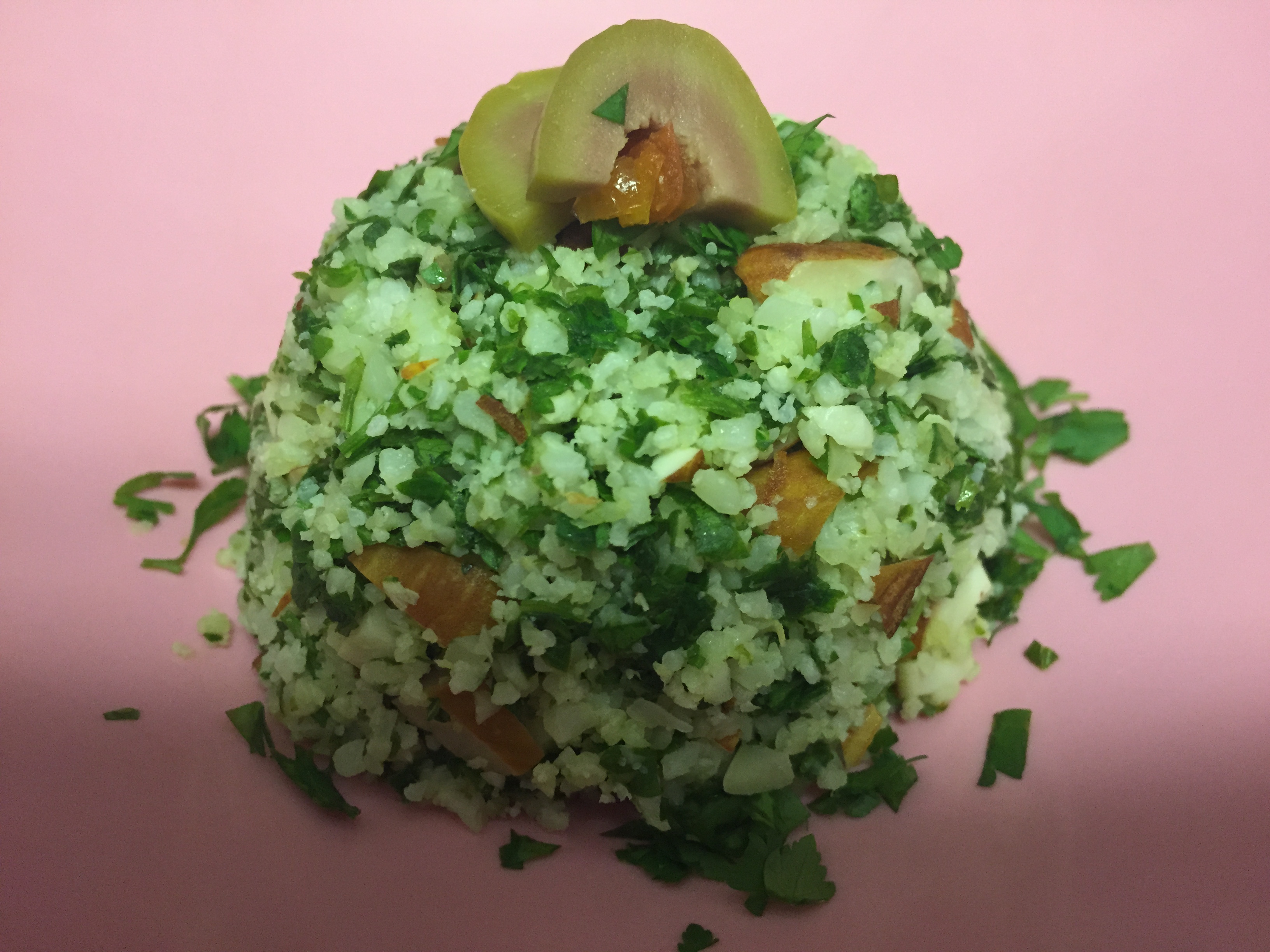
While in culinary school, one of my classmates mentioned making a cauliflower fried rice which sounded really interesting. That’s what prompted me to try this unique recipe. Cauliflower is a cancer-fighting crucifer and an excellent source of Vitamins C and K. Even my Mom, who is always skeptical of my healthy food, liked it! Success!

Cauliflower Couscous

Yield: 4 to 6 servings

INGREDIENTS

1 head cauliflower, broken into florets

½ cup almonds, toasted and roughly chopped

1 bunch cilantro, de-stemmed

1 bunch parsley, de-stemmed

2 tablespoons extra-virgin olive oil

½ teaspoon crushed red pepper flakes

Juice of 1 lemon

¼ cup sliced habanero-stuffed green olives

Salt and pepper, to taste

DIRECTIONS

1. Bring a large pot of salted water to a boil. In a separate large bowl, make an ice bath.

2. While the water is heating, place some of the cauliflower florets in a food processor. Working in batches, pulse until the cauliflower has broken down into coarse pieces around the same size as couscous.

3. Transfer the cauliflower to a large fine-mesh strainer and carefully submerge into boiling water for 1 minute. Transfer the cauliflower (still in the strainer) to the ice bath until completely cool; remove and drain well. Place the cauliflower onto a clean kitchen towel and squeeze to remove excess moisture.

4. Mince the parsley and cilantro leaves in food processor.

5. In a large bowl, whisk the olive oil, red pepper flakes, and lemon juice. Then add cauliflower, almonds, cilantro, parsley, and olives. Stir together ingredients, breaking up any clumps of cauliflower.