Zucchini Noodles with Garlic Scape Pesto!

Garlic Scapes Pesto

Garlic scapes are the flower stalks that spring out of the garlic bulb and impart a milder garlic flavor. They are harvested at this time of year so that they won’t drain nutrients from the garlic bulbs that will be dug up in a couple of months. Similar to garlic, they are high in antioxidants, believed to have anti-cancer properties, and strengthen the immune system. Zucchini noodles are such a nice no-cook summer dish and they absorb the pesto beautifully. Leftover pesto can be used in numerous ways, such as a spread on toasted baguette, tossed into a pasta with heirloom tomatoes, mixed into scrambled eggs, or spread on pizza. Unlike basil pesto, this will not brown, so it will maintain its vibrant green for the week!
1 zucchini, spiralized or julienned

Pesto:
1 cup garlic scapes, trimmed and thinly sliced crosswise (about 1/3 lb)
¼ cup pine nuts
½ cup olive oil
¼ cup freshly grated pecorino romano or parmesan
Salt and pepper, to taste

1. Add the scapes and pine nuts to the bowl of a food processor and pulse until everything is broken up a bit.
2. Then turn the processor back on, and with it running, add the oil a little at a time until it’s fully incorporated. 3. Add cheese, pulse, then season with salt and pepper to taste.
4. Mix 2-3 tablespoons into the zucchini. Enjoy!
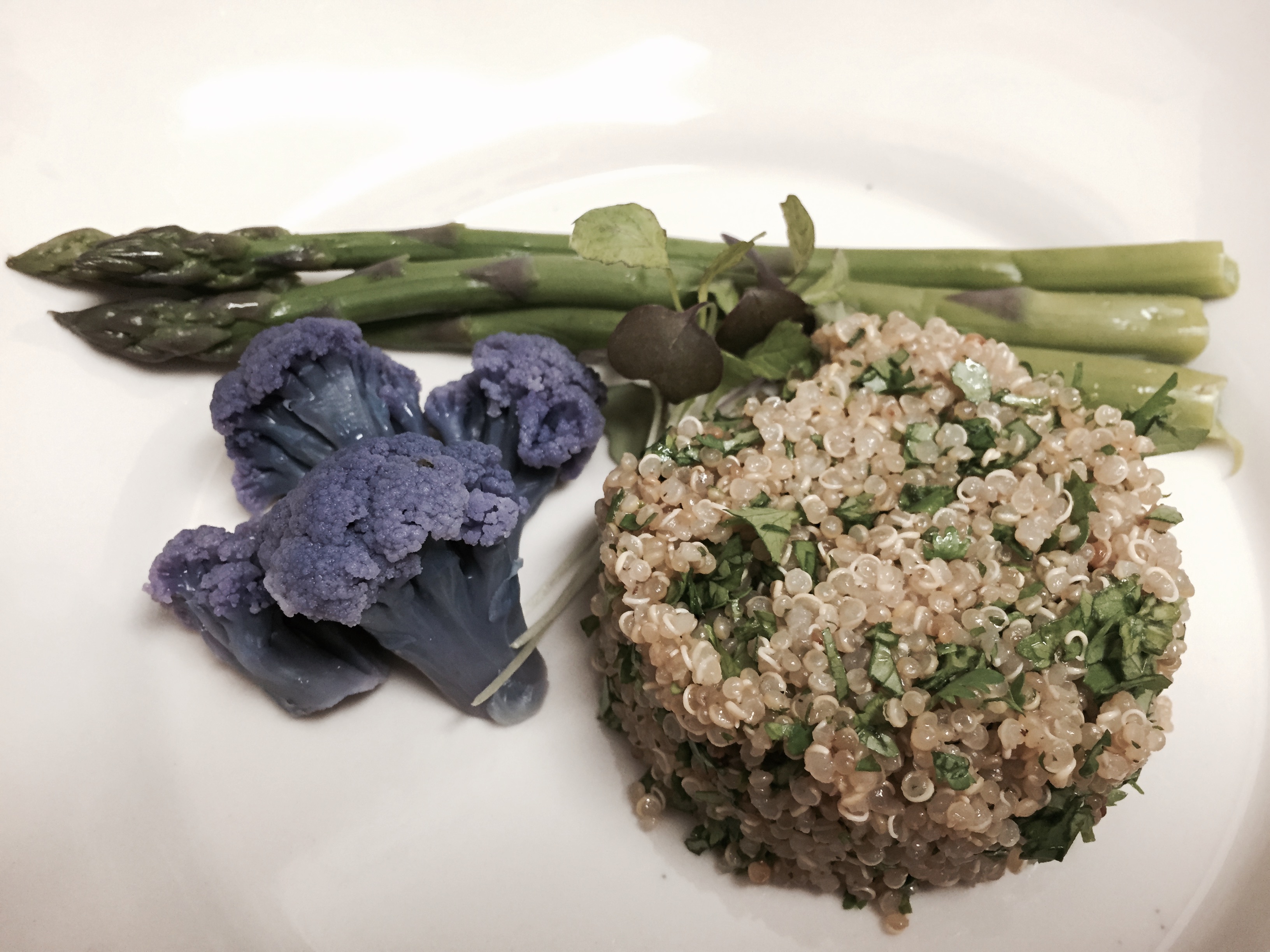
Cilantro Quinoa with Sumac Vinaigrette!

cilantro quinoa

Sumac is a reddish-purple spice that is commonly used in Middle Eastern cooking to add a tangy lemony flavor. The sumac bush produces deep red berries, which are dried and ground into this coarse powder. It was used to treat different ailments in medieval medicine. A tiny sprinkle adds tremendous flavor and pairs really well with cilantro in this quinoa salad. Sumac would also be great in hummus or sprinkled over grilled veggies before serving. Hope you’ll try this unique spice!

1 cup quinoa, cooked and cooled to room temperature
1 bunch cilantro, de-stemmed and chopped

Vinaigrette:
1 tablespoon apple cider vinegar
1/8 teaspoon sumac
1/8 teaspoon sea salt
few grinds fresh black pepper
2 tablespoons avocado oil or EVOO

1. In a large bowl, whisk together vinaigrette ingredients.
2. Add quinoa to vinaigrette and mix thoroughly, making sure to coat all of quinoa.
3. Add cilantro and mix again. Enjoy!

Rye Berry Pilaf with Balsamic Cherries & Hazelnuts!

rye berry pilaf with cherries and hazelnuts

I had never heard of rye berries before spotting them at my coop recently. And now I’m hooked! They are nice and chewy like freekah and wheatberries, as well as filling, since they are packed with a fiber called arabinoxylan (high antioxidant activity). Rye is also rich in selenium, phosphorus, magnesium, copper, zinc, and protein. The toasted hazelnuts add crunch and lovely savoriness to the salad. This would be great over spring greens and also as a hearty side dish. Enjoy!

INGREDIENTS

FOR THE BALSAMIC CHERRIES
8 ounces cherries
1 tablespoon butter
2 tablespoons balsamic vinegar

FOR THE PILAF
1 cup rye berries (or wheatberries), cooked
¼ cup hazelnuts
Salt to taste
1 to 2 teaspoons fresh thyme leaves or pinch of dried thyme, to taste
Freshly ground pepper

PROCEDURE
1. Preheat oven to 300 degrees.
2. Pit the cherries and cut in half.
3. Heat a medium or large heavy skillet over medium-high heat and add the butter. Add the cherries and sauté for 1 minute. Add the balsamic vinegar and cook no more than 1 minute. Transfer the cherries immediately to a bowl so that they don’t overcook. Set aside.
4. Place hazelnuts on baking sheet and toast in oven for about 20 minutes. When cool enough to handle, peel and roughly chop.
5. While the rye berries are still warm, combine with cherries, hazelnuts, thyme, salt, and pepper.

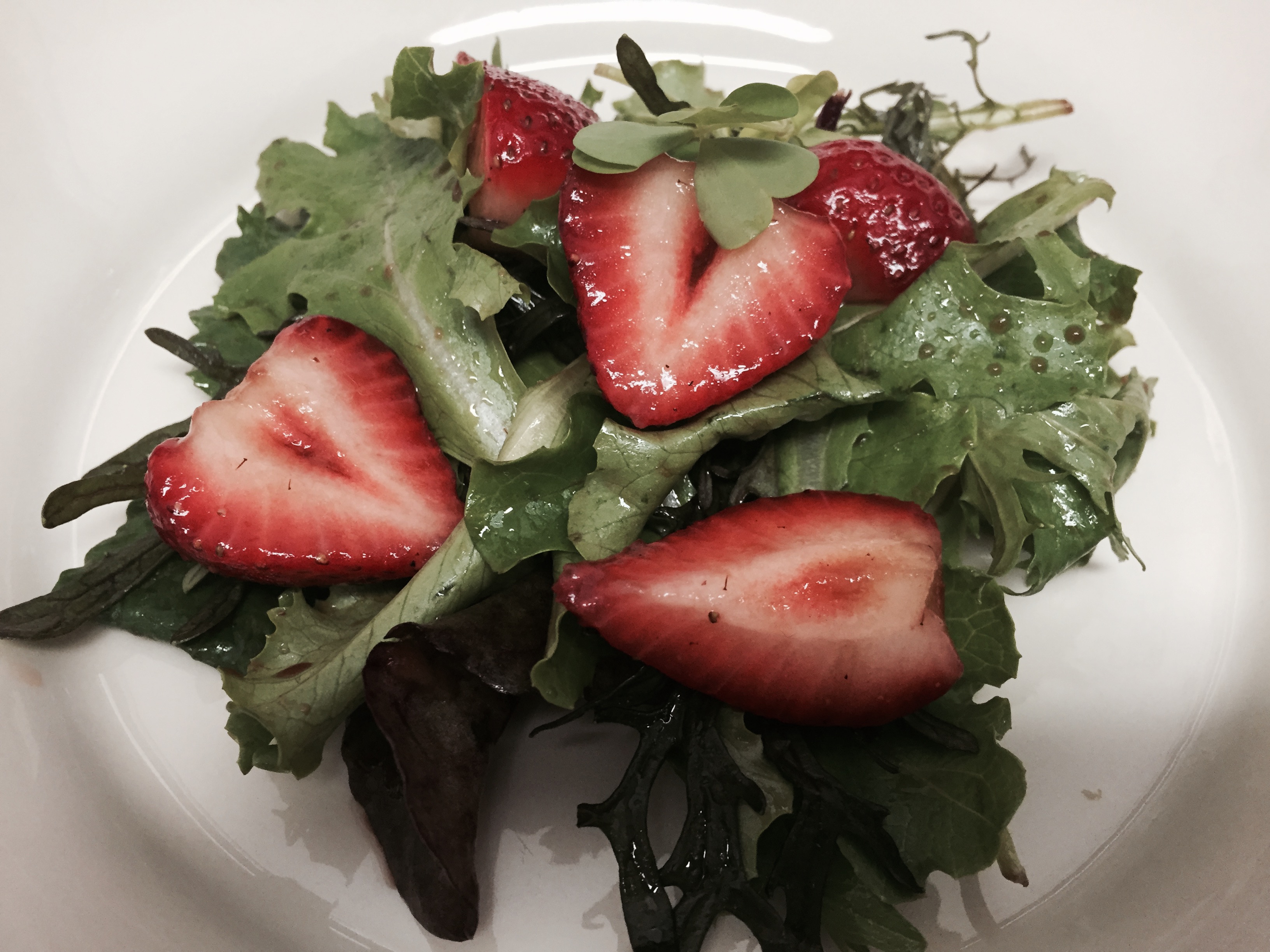
Balsamic Strawberry Salad!

balsamic strawberries

Rather than just eating an entire one pound carton of strawberries today, I chose to be a little more adventurous 🙂 A while back, one of my culinary friends suggested making a salad with balsamic vinegar and arugula. This recipe comes from Mark Bittman, who can always be trusted in the kitchen. The simplicity and freshness of the salad make it truly satisfying. Strawberries are a member of the rose family and the only fruit with its seeds on the outside. A single cup of strawberries provides more than 100% of the daily value of vitamic C as well as other powerful antioxidants. It’s important to buy organic strawberries, as conventional are grown with more pesticides than most other crops.

Makes 2 servings

1 cup strawberries, hulled and halved or quartered
1 teaspoon balsamic vinegar
freshly ground black pepper
2 cups mixed greens
sea salt
1 teaspoon extra virgin olive oil

1. Toss the strawberries with the vinegar and black pepper in a large salad bowl and let sit for 10 minutes
2. Add the greens, sprinkle with sea salt and toss again. Drizzle with olive oil and toss gently one last time.
3. Taste, adjust the seasoning, and serve. Enjoy!

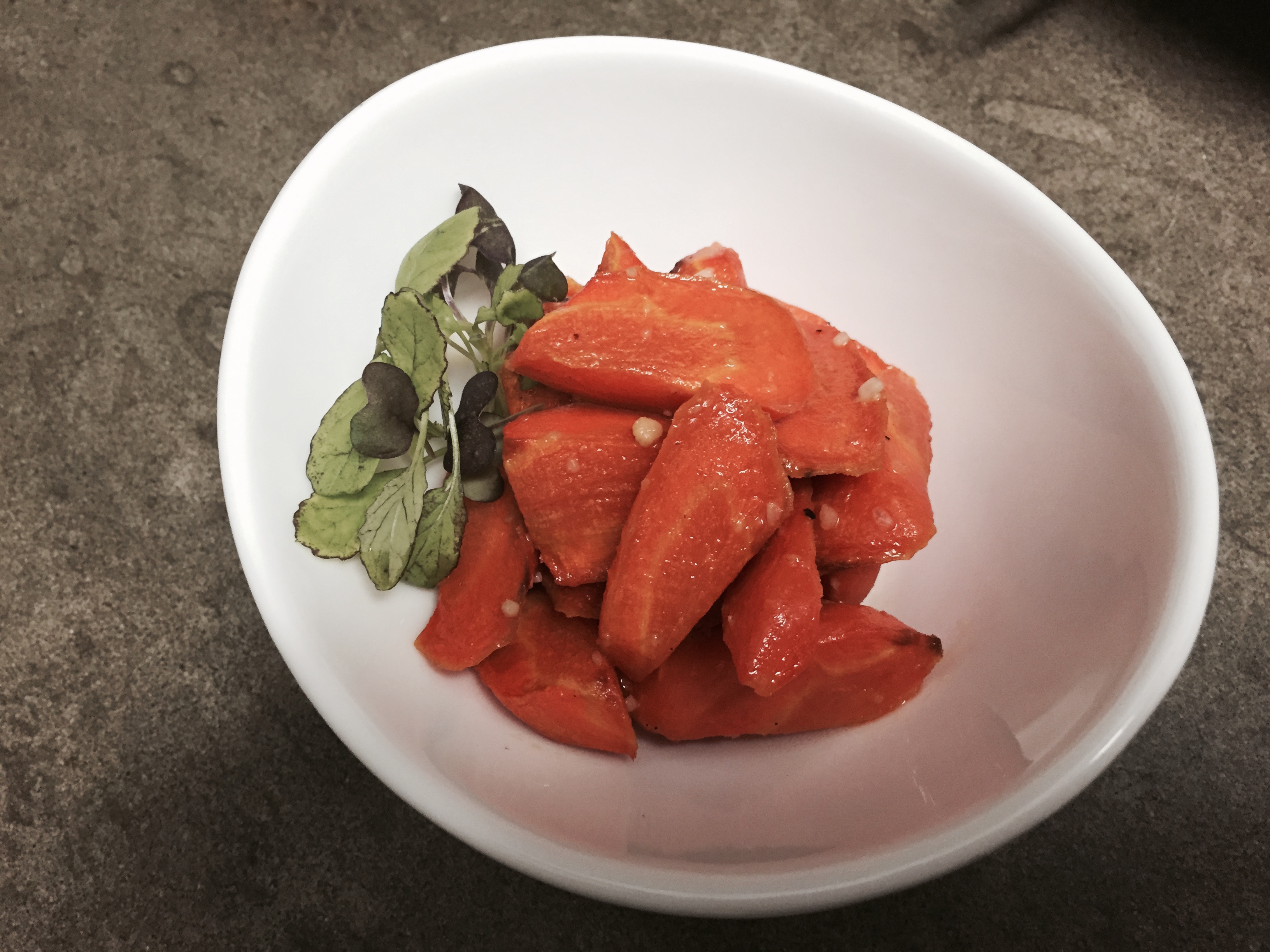
Miso-Lime Dressing!

miso-lime carrots

The combination of miso, lime juice, and walnut oil makes for a very unique and delicious dressing. Walnut oil is best used in dressings, as it loses flavor and nutritional value when heated. It is a good source of omega-3 fatty acids, which aid in memory and overall brain function. Walnut oil is also high in ellagic acid and antioxidants which have been shown to kill cancer cells and fight free radicals. The dressing is perfect on roasted veggies, such as the roasted carrots here. However, it would be wonderful on grilled veggies, like zucchini, in the summer or mixed in with your favorite grains. This would make for a great side dish at a barbecue or picnic, and intrigue your guests! Enjoy!

2 tablespoons lime juice (about 1 lime)
1 ½ teaspoons white miso paste
2 tablespoons walnut oil

Whisk together lime juice and miso paste until smooth. While whisking, drizzle in walnut oil until mixed thoroughly.

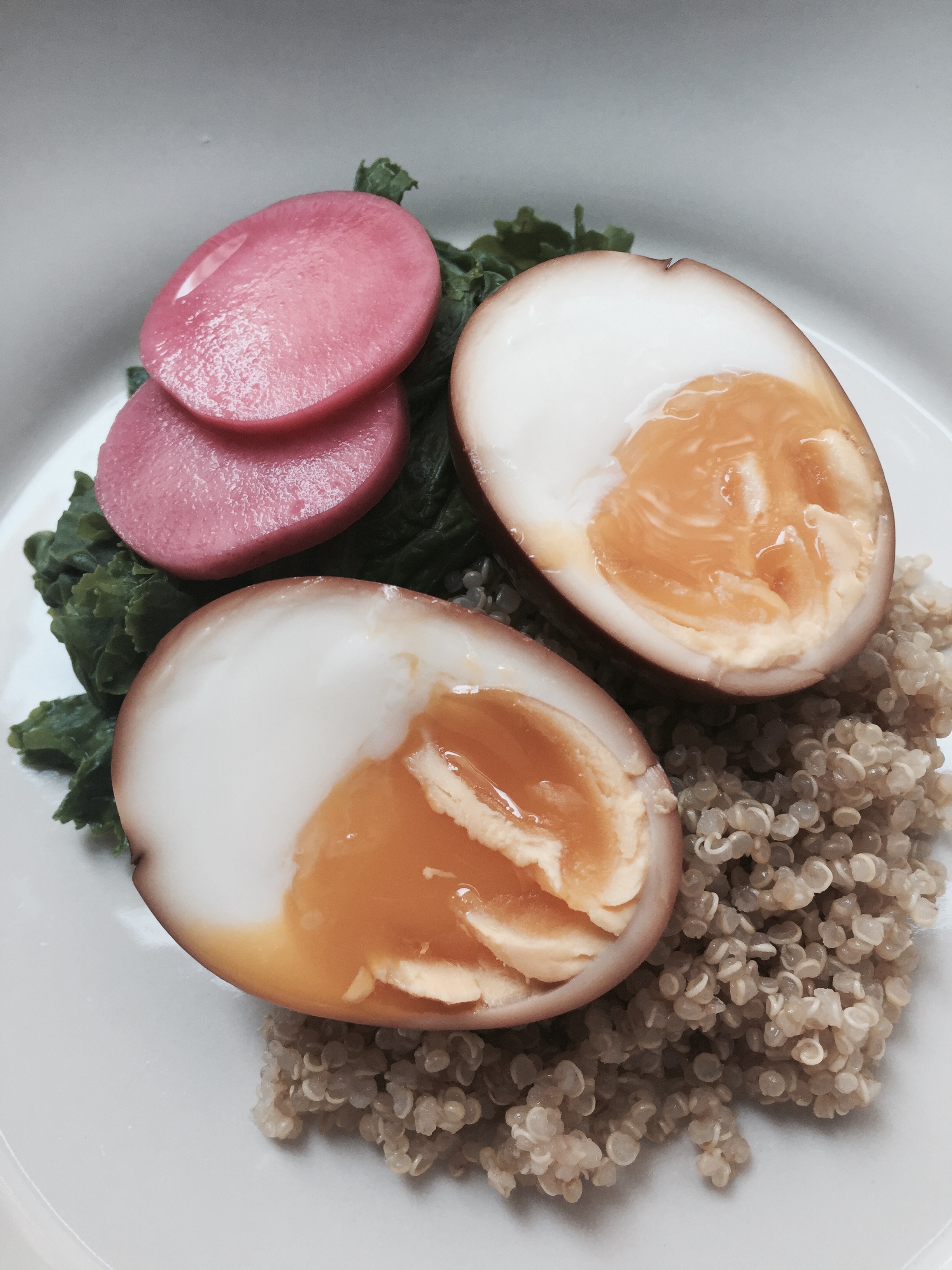
Soy Sauce Eggs!

soy sauce eggs

My mom makes a Chinese dish of braised pork and eggs, and while I love those eggs, I wanted to make a vegetarian version. When I saw this recipe on the Food52 website from Christina Tosi of Momofuku, I needed to try it! Besides being a great source of protein, eggs are high in B vitamins and antioxidants. Also, something that I learned in culinary school is that eggs have a net protein utilization (NPU) of 1, which means that 100% of the nitrogen supplied by the egg is converted into protein.

These are essentially medium-boiled eggs (set white, runny yolk) and marinated in a soy sauce mixture for up to 6 hours, so a very simple recipe. Once done, you can enjoy them in so many ways. They’re delicious on their own, but would be delicious in a bowl of ramen, on toast, or on a salad. I don’t see them lasting long in my fridge! 🙂

Makes 6 eggs

6 tablespoons warm water
1 tablespoon sugar
2 tablespoons sherry vinegar
¾ cup soy sauce (we used low-sodium—if yours is regular strength, you might want to err on the side of shorter marination time)
6 large eggs
Maldon or other flaky salt, for serving
Black pepper, for serving

Procedure:
1. In a medium bowl, whisk together the water and sugar to dissolve the sugar, then stir in the sherry vinegar and soy sauce.
2. Bring a large pot of water to a boil. Carefully put the eggs into the boiling water and cook for exactly 6 minutes and 50 seconds, stirring slowly for the first 1 1/2 minutes to distribute the heat evenly. Meanwhile, fill a large bowl with cold water and ice. When the eggs are done, transfer them to the ice bath.
3. Once the eggs are cool (and the water isn’t uncomfortably icy), peel them (in the water—this will help them keep a perfect exterior). Transfer the eggs to the soy sauce mixture and marinate in the fridge for at least 2, and up to 6, hours, making sure they are completely submerged. If necessary, top the eggs with a small plate to ensure submersion.
4. Remove the eggs from the sweet and salty solution. You can save the soy sauce mix for another round of eggs, if you wish. The eggs will keep, refrigerated in a tightly sealed container, for up to a month.
5. To serve, cut the eggs in half lengthwise and season with salt and pepper.

Smashed Cucumber Salad!

smashed cucumbers

This is one of my favorite dishes to order at a Chinese restaurant, but I never realized how easy it is to replicate at home! The chinese name for the salad translates roughly into “banged cucumber,” as cucumbers are traditionally banged with the wide flat side of a cleaver. This step is essential to get the correct texture of the salad and can serve to reduce some stress 🙂 Be aware that some of the seeds and juice will fly out when smashing them. It is best made with persian cucumbers, but an english cucumber could be substituted. Cucumbers are a good source of Vitamin K as well as Potassium.This salad has the perfect balance of salty, sour, sweet, and spicy and is rather addictive. Consider it a healthy snack food. Enjoy!

Ingredients:
12 oz. Persian cucumbers (about 5-7)
½ tsp sea salt
2 cloves garlic, minced
1 tsp sesame oil
½ tsp granulated sugar
½ tsp red pepper flakes

Procedure:
1. Slice ends off cucumbers and quarter them lengthwise. Then smash with a chef’s knife or cleaver and cut pieces into thirds (about 1/2 inch wide and 2 inches long).

2. Add in all the remaining ingredients and mix until cucumbers are evenly coated in seasonings. Taste and adjust as needed. You can eat right away or let the cucumbers sit in the fridge to further develop the flavors.

Quinoa Tabouli!

tabouli

Quinoa is one of the few plant-based, complete protein foods, which means that it contains an adequate proportion of all nine essential amino acids. Some of the vitamins and minerals that are abundant in quinoa include vitamin E, B vitamins, zinc, potassium, phosphorus, magnesium, and iron. It’s a great source of protein, with a half-cup serving providing 4 grams of protein! This superfood is used instead of the traditional bulgur (cracked wheat), which makes it ideal for a gluten-free diet. Tabouli is one of my favorite dishes to make and is so refreshing with lots of parsley, mint, and lemon.

1 cup quinoa, rinsed
1⁄2 cup lemon juice (about 3 lemons)
1⁄4 cup extra virgin olive oil
1⁄2 teaspoon sea salt
2 plum tomatoes, seeded and cut into small dice
1 bunch parsley, chopped
1⁄2 bunch mint, chopped
4 scallions, thinly sliced
4 ribs celery, cut into small dice
Sea Salt and pepper, to taste

1. Cook quinoa according to package instructions.
2. In large bowl, whisk together lemon juice, olive oil, and salt. While quinoa is still warm, toss with dressing. Let sit until it reaches room temperature.
3. Add remaining ingredients and mix well. Enjoy!

Cauliflower Fried “Rice”

cauliflower fried rice

This is such a brilliant way to make a healthy fried “rice.” No wonder it’s gone viral on food sites! The recipe is pretty basic and can be customized with whatever veggies or leftovers you happen to have in the house. Cauliflower is a cancer-fighting crucifer and an excellent source of Vitamins C and K. This is a fried rice that you won’t feel guilty about having seconds of! If you’re watching your carb intake, this is a really satisfying dish without the heaviness of your typical takeout. Also, you can process the cauliflower into “rice” and freeze, so that it’s ready to go anytime. Enjoy!

Ingredients:
1 head cauliflower, rinsed and cut into small florets
1 tbsp sesame oil
1 small onion, diced small
1 cup frozen peas
2 carrots, peeled and diced
2 garlic cloves, minced
½ bunch scallions, thinly sliced, whites and greens separated
3 tbsp soy sauce, or more to taste (Tamari for Gluten Free)

Procedure:
1. Allow cauliflower to dry completely. In a food processor, place as many florets that fit in a single layer and process until size of rice. Do not over process; otherwise, it will end up mushy. Set aside and repeat with the remaining cauliflower.
3. Heat a large saute pan or wok over medium heat and add sesame oil.
4. Saute onions, scallion whites, peas, carrots, and garlic about 3 to 4 minutes, or until soft.
5. Raise the heat to medium-high. Add the cauliflower “rice” to the saute pan along with soy sauce. Mix, cover and cook approximately 5 minutes, stirring frequently, until the cauliflower is slightly crispy on the outside but tender on the inside.
6. Remove from heat and mix in scallion greens.

Sweet Tahini Sauce!

tahini sauce

This dressing is kind of a mediterranean meets asia recipe, adapted from one found in Yotam Ottolenghi’s Plenty More cookbook. All of the flavors work so well together. It’s best to use unfiltered apple cider vinegar, which is full of probiotics, the good bacteria in your gut that aid digestion and strengthen immunity. Tahini is not just for making hummus; break out your jar and make this yummy sauce! It’ll get your loved ones to eat their veggies 🙂 This would also be a great on a crudite platter. Those veggies will be gone before you know it! Enjoy!

2 tablespoons tahini
2 tablespoons water
1 tablespoon unfiltered apple cider vinegar
½ teaspoon soy sauce
1 teaspoon honey
1/4-1/2 teaspoon salt

Whisk all ingredients together and serve with your favorite veggies.

Blistered Shishito Peppers!

shishito peppers

In the office this past week, I overheard some guys talking about shishito peppers and how one of them was trying to grow them in his garden. He was eating them by the bowlful and thought it would be more economical to grow his own. I had been intrigued about these peppers in the past, but never really got around to trying them until today. I bought some at my coop this morning and then noticed them in Trader Joe’s too! These Japanese peppers are high in vitamins A and C. They’re generally not spicy peppers, but about one out of every ten is spicy (mild), which is actually a pleasant surprise. Unlike jalapenos, they are thin-walled, so they cook very quickly on the stove and are best eaten while still warm. Eat the entire pepper, except the stem. They’re delicious, making it easy to polish off the entire bowl, like I did. They make for a quick appetizer or snack, and even a nice side dish for brunch!

Ingredients:
2 teaspoons sesame oil
6 ounces shishito peppers
sea salt
1/2 teaspoon toasted sesame oil
1/2 teaspoon soy sauce
1/2 teaspoon toasted sesame seeds

Procedure:
1. In a large dutch oven, over high heat, add sesame oil.
2. When hot, add shishito peppers and a pinch of salt. Toss to combine.
3. Saute for 4-5 minutes, stirring frequently, until the peppers are mostly blistered on all sides.
4. Toss with sesame oil and soy sauce until the peppers are evenly coated, and sprinkle with sesame seeds.
5. Serve warm. Enjoy!

Roasted Beech Mushrooms!

beech mushrooms

I have yet to find a type of mushroom that I don’t like! Mushrooms have traditionally been used as an antitumor, antifungal, and antiarthritic medicinal food. They are also full of umami, described as a savory, rich flavor and is the fifth taste, following sweet, salty, bitter, and sour. Mushrooms are a great source of B vitamins, phosphorus, magnesium, potassium, and selenium. They are the only plant that provides a natural source of vitamin D. These brown beech mushrooms, also called bunashimeji, originated in Japan and are now cultivated in the US. They are sold in clusters in the supermarket and can be found at Whole Foods and even from Fresh Direct. They take minimal effort to prepare and are absolutely delicious out of the oven! I love to put them on top of my salad to add that rich, umami flavor.

Ingredients
1 package brown beech mushrooms (bunashimeji), about 2.5 ounces
2-3 teaspoons olive oil
sea salt
pepper

Procedure
1. Preheat oven to 400 degrees F.
2. Trim bottom of mushrooms and separate them into single pieces.
3. Toss with olive oil, just enough to lightly coat them so that they will crisp up.
4. Season with sea salt and pepper.
5. Roast for about 15-20 minutes, until browned and crisp.

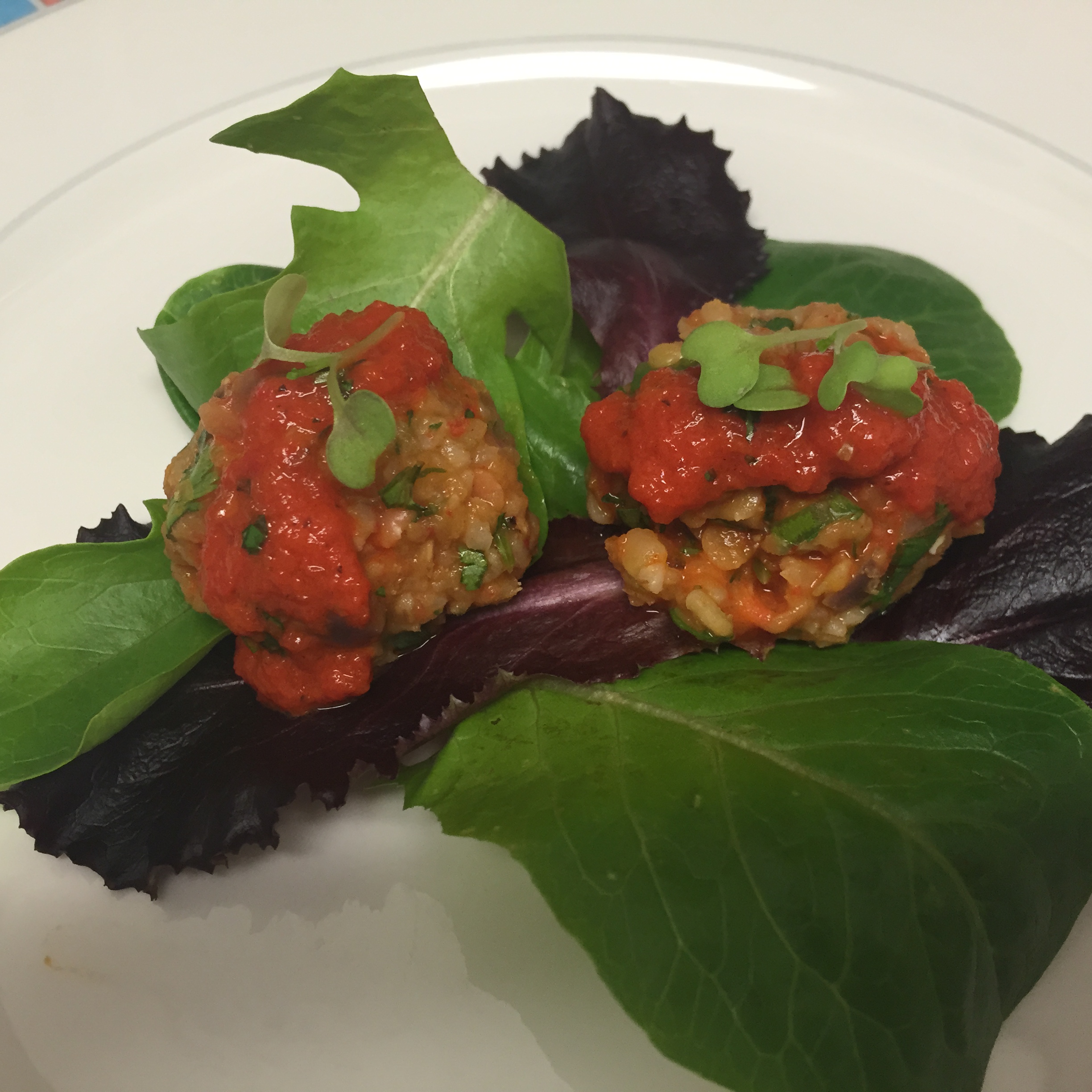
Red Lentil-Bulgur Lettuce Wraps with Roasted Red Pepper Sauce!

red lentil-bulgur

Lentils are a good low-fat source of protein as well as copper and magnesium, which are necessary for energy production and healthy bone tissue. Red lentils cook particularly fast compared to other lentils, since they are split. Since red lentils are not a complete protein on their own, the addition of bulgur to this recipe makes the combination a complete protein. The red pepper paste is done in no time in a food processor or powerful blender and truly delicious. The lemon juice, cilantro, and scallion really brighten up the lentils. The entire recipe is incredibly easy for a quick weeknight meal and would be perfect for a meatless Monday! 🙂

For the Quick Red Pepper Paste:
1 12-ounce jar roasted red peppers, drained
1 teaspoon smoked paprika
1/2 teaspoon red pepper flakes
2 tablespoons olive oil
For the lentil tabouli:
1 tablespoon olive oil
1 red onion, finely chopped
4 garlic cloves, minced
1/2 cup Quick Red Pepper Paste, separated
1 teaspoon ground cumin
1/2 teaspoon smoked paprika
1 cup red lentils
2 cups vegetable broth
1 teaspoon sea salt
1/2 cup bulgur wheat
2 pieces of scallion, thinly sliced
1 bunch cilantro, finely chopped
juice of 1 lemon
Freshly ground black pepper

Bibb lettuce or Boston lettuce (optional)

Instructions:
1. To make the Quick Red Pepper Paste: In a food processor, or blender, blend the red peppers with the smoked paprika, red pepper flakes, olive oil, and a pinch of salt until it forms a thin paste or sauce. Leftover paste may be refrigerated in a covered container for up to 1 week.
2. To make the lentil tabouli: In a 2-quart or larger saucepan, heat the olive oil and cook the red onion and garlic over medium heat for 5 minutes, or until soft and fragrant. Add 1/4 cup of the red pepper paste, the cumin, and paprika, and sauté for 30 seconds.
3. Stir in the red lentils and pour in 2 cups broth and 1 teaspoon salt. Bring to a boil, then simmer for 10 minutes or until the lentils have softened. Stir in the bulgur wheat. Remove from the heat and cover the pan. Let the lentils and bulgur rest for 20 minutes, or until the mixture is thick and soft.
4. Stir in an additional 1/4 cup red pepper paste, as well as the scallions, cilantro, lemon juice, and a generous quantity of black pepper. Taste and add more salt and pepper if desired. Set aside to cool.
5. When the lentil mixture has cooled, form it into walnut-sized balls. Place one or two lentil balls or a dollop of lentil mixture in the center of a lettuce leaf, drizzle with roasted red pepper sauce, and roll up the lettuce or pinch it closed like a taco to eat.
7. Eat immediately or refrigerate the lentil mixture for up to 3 days.

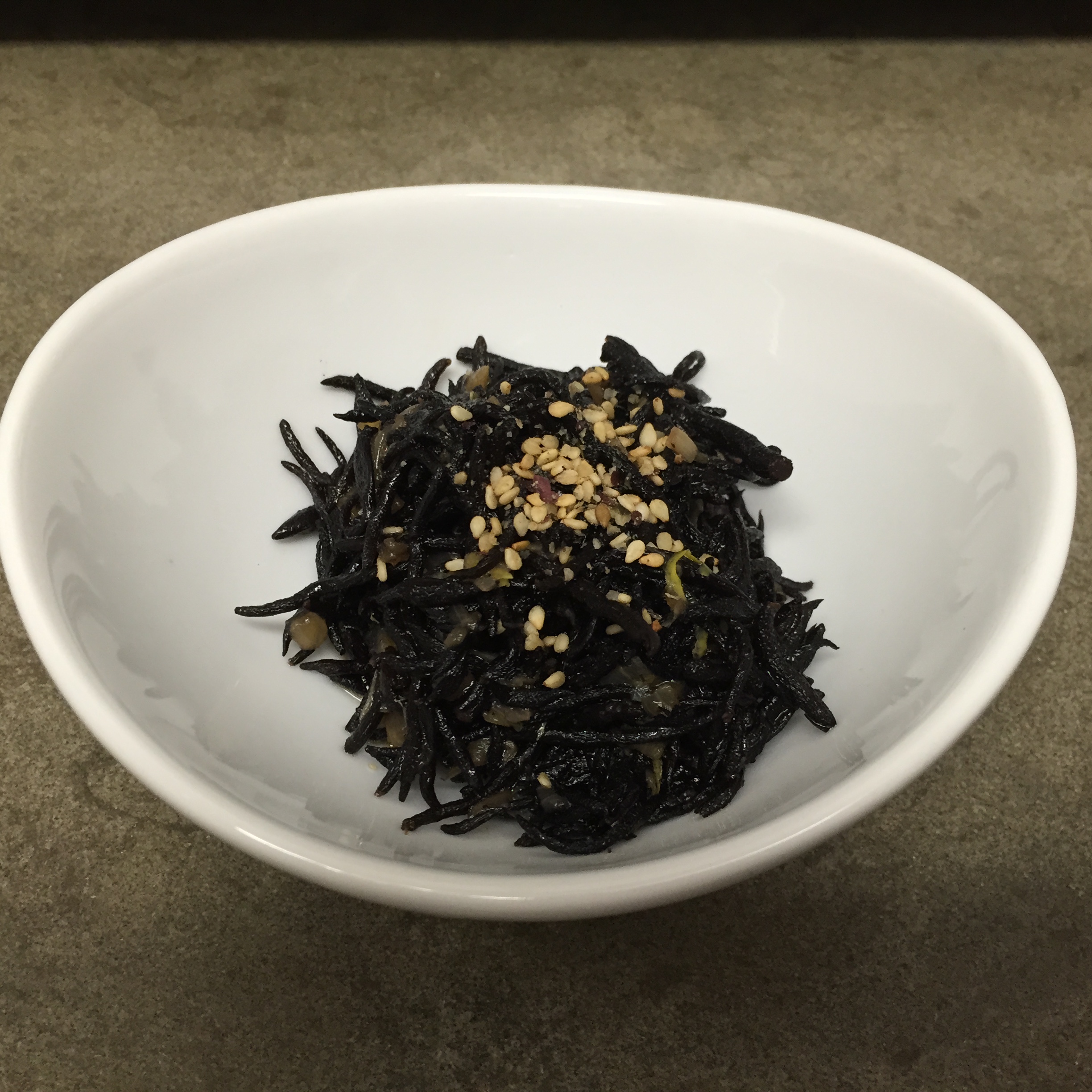
Hiziki with Lemon!

hiziki

As long as I can remember, I’ve always loved seaweed in all forms. As kids, my brothers and I used to eat the dried, roasted nori strips as snacks. The green seaweed salad at Japanese restaurants was always and still is a favorite side dish. In Chinese restaurants, you can find kombu seaweed salad that is a very dark green, usually prepared with lots of garlic. My mom used to tell us that eating seaweed would make our hair darker (Japanese folklore)! In culinary school, we learned about all types of seaweed in our sea vegetables class. As it turns out, hiziki is the most nutrient dense! It became more widely available in the US during the macrobiotic movement. It’s high in fiber as well as essential minerals, including calcium, iron, and magnesium. Hope you enjoy this simple recipe!

1 cup dried hiziki (rinsed and soaked 15-20 minutes)
1 small onion, small dice
2 teaspoons sesame oil
2-3 tablespoons shoyu or soy sauce
1 lemon, zested and juiced

1. Drain off any remaining soaking water from hiziki and discard.
2. In a large saute pan, saute onion in sesame oil for 3 to 5 minutes. Add hiziki, mixing well.
3. Add enough water to just barely cover hiziki. Add shoyu or soy sauce. Bring to a boil. Cover, lower the heat, and simmer for about 30 minutes. Remove cover and cook until most liquid has evaporated.
4. Gently stir in lemon juice and zest until well mixed. Serve.

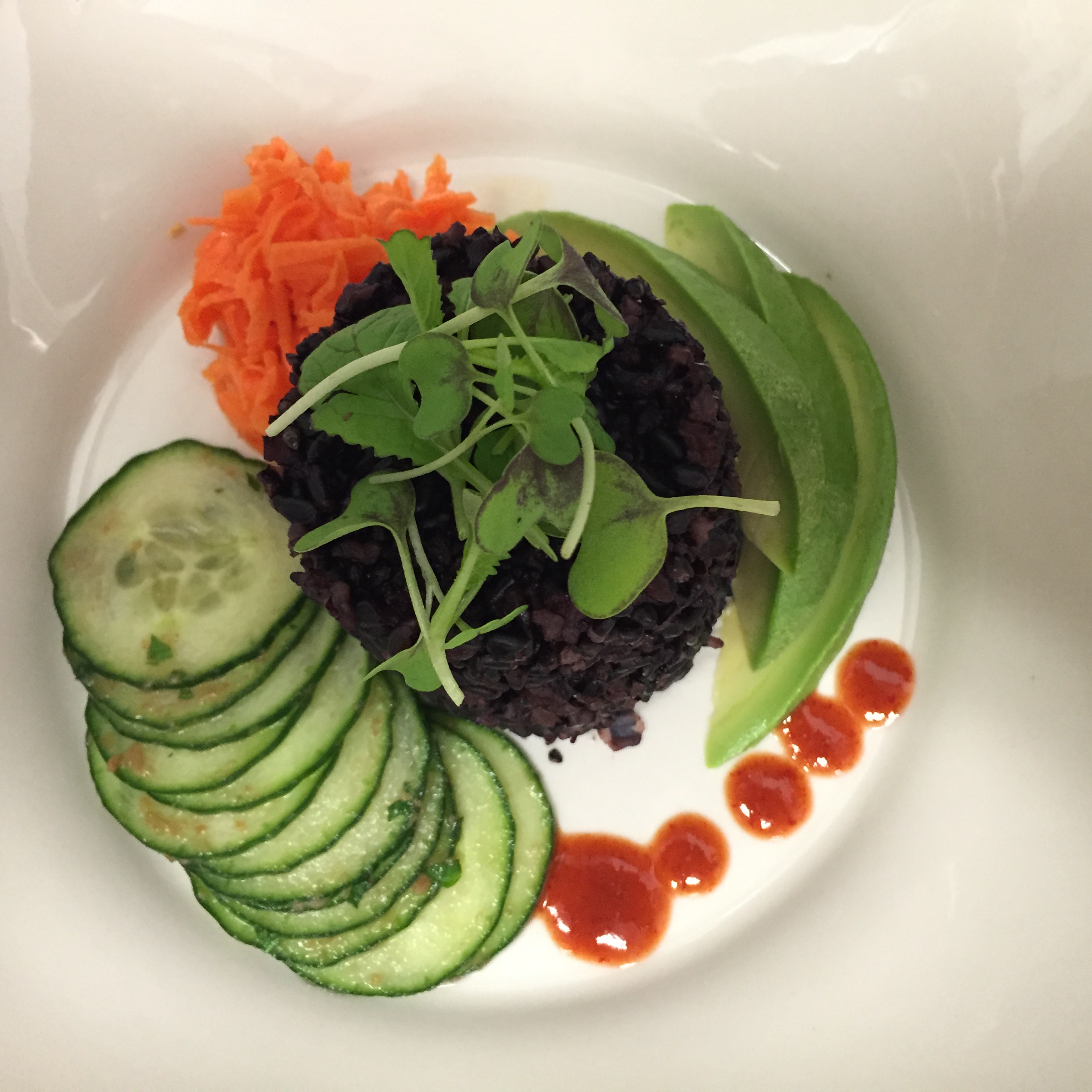
Bibimbap!

bibimbap

This is my modernized version of bibimbap, made with forbidden black rice. According to legend, this rice was only to be consumed by the emperors of ancient China and “forbidden” to the general public. Black rice has a sticky texture and slightly nutty flavor. Not only does it look beautiful, but it has the most protein of any type of rice and double the fiber of brown rice! When cooked, it turns a deep purple, indicating that it contains powerful phytochemicals that are believed to fight cancer, heart disease, and lower cholesterol. This superfood also contains more antioxidants than blueberries! Cook as you would any other type of rice.

Tonight, I also made a quick cucumber salad with an umeboshi dressing. Umeboshi paste is made from umeboshi plums that are pickled by packing them in sea salt and shiso leaves for about 6 months. In Asian medicine, they are used to treat various maladies. They are believed to relieve hangovers, stomach distress, morning sickness, and fatigue. Since they are high in sodium, they may not be ideal for anyone with high blood pressure.

Cucumber Salad with Umeboshi Dressing

Ingredients
1 tablespoon umeboshi paste
1 tablespoon mirin
8-10 mint leaves, finely chopped
1 english cucumber, thinly sliced

Directions
1. Whisk together the umeboshi paste, mirin, and mint in a large bowl.
2. Toss the sliced cucumbers with the dressing until the cucumbers are well coated.
3. Enjoy!

SuperSeed Crackers!

seed crackers

A couple of weeks ago, I was working at the coop (required for membership) and needed a snack. One of the customers purchased a box of Mary’s Gone Crackers, which looked like a healthy option. I loved them and before I knew it, I had polished off the entire box! (not unusual :P). They reminded me of these raw seed crackers that I had tried in culinary school while helping out with a dinner for another class. Therefore, I decided to try making a similar version at home, instead of buying another box. This recipe is supereasy, healthy, and yummy; hence, a great snack option 🙂 Not only are these crackers packed with omega 3s and antioxidants, they are also gluten-free, raw, and low-carb!

Ingredients:
1/3 cup chia seeds
1/3 cup flax seeds
1/3 cup sunflower seeds
1 cup coconut water
1 teaspoon za’atar
¼ teaspoon garlic powder
¼ teaspoon sea salt

Instructions:
1. *If using oven, preheat to 300 degrees. Combine all seeds and blend for about 10 seconds in the Vitamix or other powerful blender. Do not make into fine powder; leave some texture.
2. Add remaining ingredients to blender.
3. Blend again to fully incorporate ingredients. The batter should not be as thick as cookie dough but not as thin as pancake batter. It should resemble fluff, just not as sticky.
4. Using a spatula, spread onto Tefflex-Lined Dehydrator Screens or silpats about 1/8th of an inch thick. The thinner you spread it, the crispier the cracker.
5. If using oven, bake for about 30 min on each side, watching it closely. If using dehydrator, set to 155 degrees for 8 hours on each side, until crisp. If this doesn’t end up being crispy enough, you may have to put it into the oven.
6. When done to desired crispness, break apart and store in airtight container.

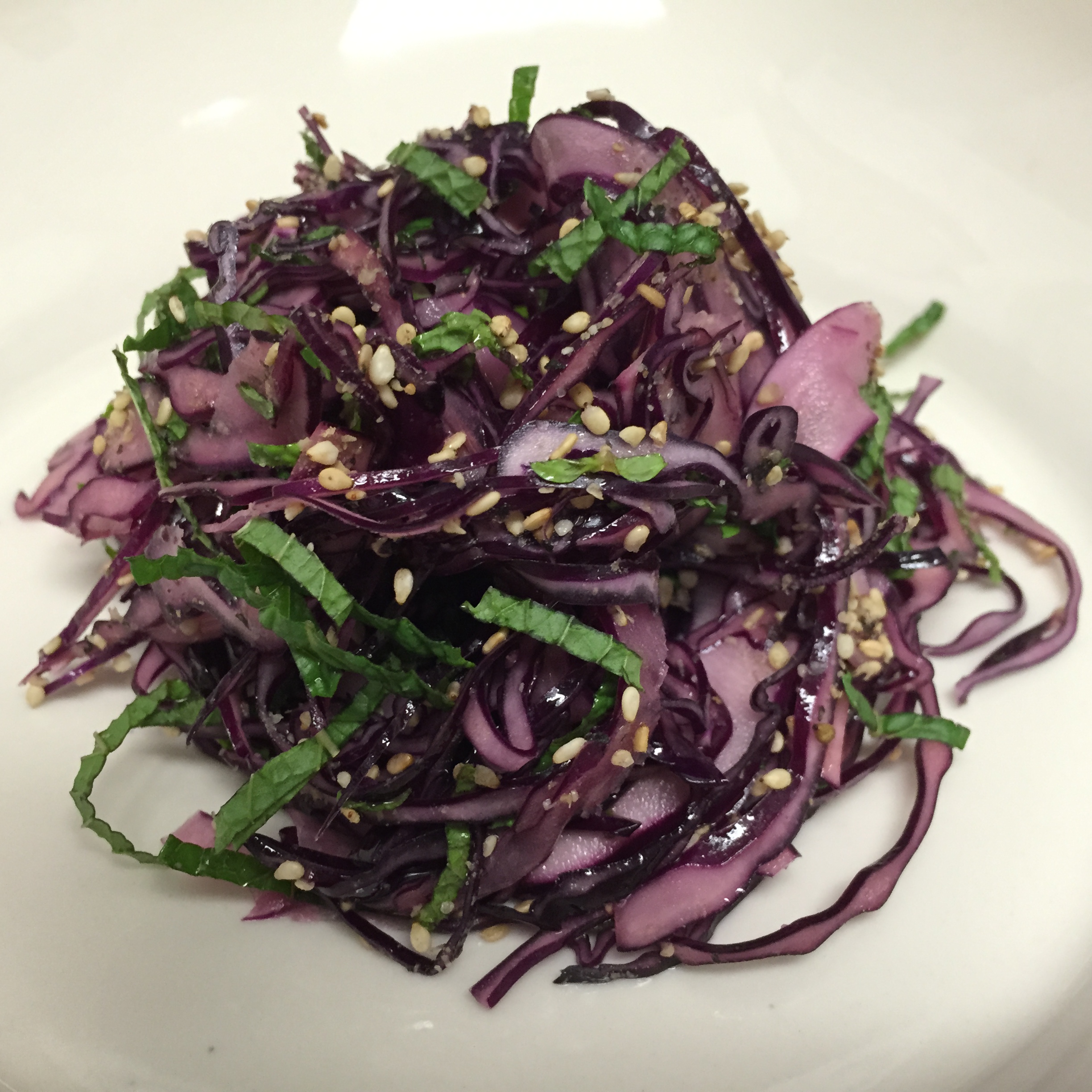
Asian Red Cabbage Slaw with Mint!

asian red cabbage slaw

After making the red cabbage and carrot slaw earlier in the week, I still had half a head of red cabbage and leftover mint in the fridge. I didn’t have a lot to work with and was too tired to head out to the supermarket, so this was the perfect recipe! Not until culinary school was I introduced to gomasio, which is a dry condiment made from toasted sesame seeds, sea salt, and seaweed. In Japanese cuisine, it is often sprinkled over plain rice. As part of a macrobiotic diet, it is used as the healthier alternative to ordinary salt. The slaw would be refreshing on fish tacos! The vinaigrette is very versatile and I could see it being delicious for a summer cucumber salad 🙂

½ head red cabbage, thinly sliced
¼ bunch mint, chiffonade
1 teaspoon gomasio or toasted sesame seeds (garnish)

Sesame Vinaigrette:
3 tablespoons rice vinegar
2 tablespoons soy sauce
2 tablespoons sesame oil
1 tablespoon honey

Instructions:
1. In a large bowl, whisk together vinaigrette ingredients.
2. Add cabbage and mint, making sure dressing is evenly distributed.
3. Sprinkle with gomasio or sesame seeds before serving. Enjoy!

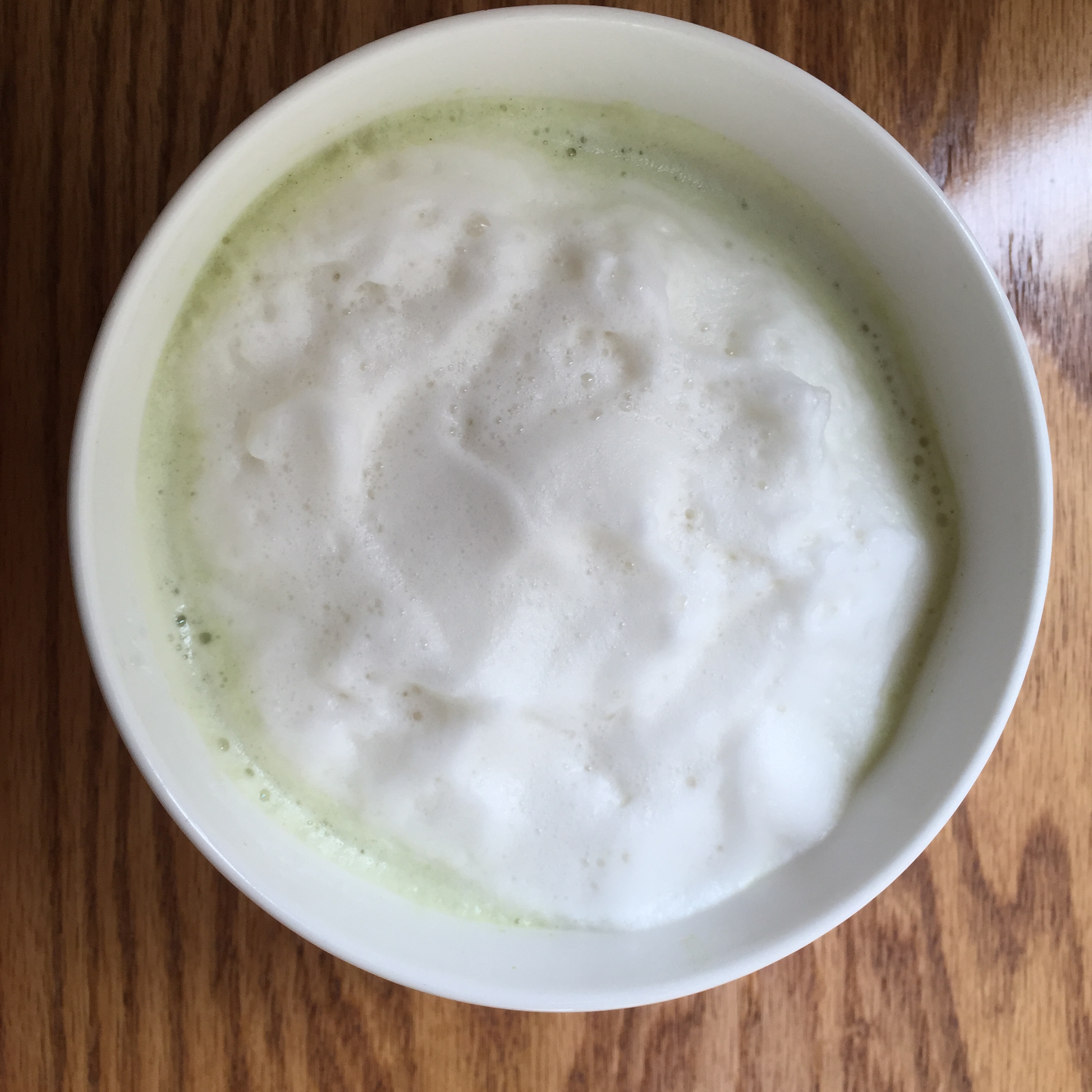
Matcha Green Tea Latte!

matcha latte

Lately, I’ve been avoiding drinking coffee since it doesn’t seem to agree with my stomach. Although I love the taste of coffee, I’ve been moving towards tea and love this matcha latte! After paying $7 for one at Teavana, I decided to start making them at home 🙂 Matcha green tea has higher levels of antioxidants than spinach and blueberries. One cup of it has the equivalent nutritional and antioxidant value as 10 cups of regular green tea! Since the matcha powder is consumed as compared to regular tea, where the leaves are discarded following brewing, the chlorophyll is said to detox the body and balance pH levels in the blood. Similar to coffee, matcha is high in caffeine, but rather than giving a short intense burst of energy, it gives a more sustained energy. It is also believed to lower blood pressure, improve memory, and reduce stress. Enjoy a soothing cup!

Ingredients:
½ – 1 teaspoon of matcha green tea powder, depending on how strong you prefer
1/3 cup of warm-hot, but not boiling, water
1 cup warm-hot almond milk or soy milk
Optional: 1 teaspoon honey or agave

Instructions
1. Whisk green tea powder and water in a small bowl until the tea is dissolved and top slightly
foams.
2. Stir in sweetener, if using.
3. Add warm milk to the top of the drink, filling the cup.(If you have a milk frother, froth the warm milk first, then pour.) If you don’t have a frother, you could pulse in a blender.

Red Cabbage & Carrot Slaw!

red cabbage and carrot slaw

One of my friends shared this recipe with me a couple of years ago and I’ve been making it ever since! Red cabbage is such a beautiful, vibrant purple, indicating its high concentration of antioxidants. It’s not only a good source of Vitamin C, but has 10 times more Vitamin A and twice as much iron as green cabbage. For this slaw, I prefer to use the mandolin over the food processor to get it thinner, allowing it to be more tender. The carrots are easily shredded by hand with a box grater or very quickly in the food processor, which is what I did today. Toasting the pumpkin seeds really gives them a greater depth of flavor and extra crunch, which is welcoming in this slaw. I choose to just sprinkle them on top, so that they won’t get soggy. This would be perfect to bring to a bbq or spring/summer potluck. Enjoy!

1/2 red cabbage, thinly sliced
4 carrots, peeled and grated
4 sprigs fresh mint, chiffonade*
2 tablespoons pumpkin seeds, toasted

Dressing:
¼ cup extra-virgin olive oil
1 lemon, zested and juiced
1/8 teaspoon cinnamon
1/8 teaspoon ground cumin
1 teaspoon honey
½ teaspoon salt

Directions:
1. In a large bowl, whisk dressing ingredients together.
2. Add cabbage and carrots to bowl and toss, ensuring dressing is evenly distributed.
3. Add mint and gently toss again
4. Sprinkle toasted pumpkin seeds on top and extra mint, if desired, for garnish.

*chiffonade is just a fancy way of saying to cut into thin strips or ribbons. Pick the mint leaves off the sprigs, lay them on top of each other (10 at a time), roll lengthwise, and slice into thin strips.

Collard Wraps!

collard wrap

Collard wraps are a much healthier alternative to the highly-processed flour wraps bought in the store. They are a great source of calcium and vitamin K. I prefer to eat it raw because I like the crunch, but if that’s too much, you can blanch it very quickly in hot water to make it more tender. You can pretty much fill these with anything; i’ve made a breakfast burrito before with scrambled eggs, avocado, and harissa. Today, I made mine with hummus, quinoa, spiralized beets, and some micro greens 🙂 These gained popularity in California and I have yet to see them invade NYC. Juice Press, which sells fresh pressed juices and raw food, has one filled with raw sunflower seed hummus and raw falafel, which is one of my favorites. Bareburger, which offers plenty of meat and non-meat burgers, offers the option of getting your burger wrapped in cooked collard leaves. It turns out looking like a burrito, but it is nice to have the healthy option. If you’ve never had a collard wrap, I hope you’ll give it a try!

Collard greens

Fillings of your choice (ex: hummus, quinoa, veggies..)

1. Trim the bottom stem off. Then, using a paring knife, shave the dense stalk down to about the same thickness of the leaf, so that it will roll up easily. Be careful not to tear the leaf with knife.
2. Place wrap filling in the middle and roll up from bottom to top, like a burrito, folding in the sides halfway up.
3. Slice in half with a sharp knife. Enjoy!